
Problematic History
How we misunderstand the Civil War—and ourselves

Today “problematic” is often used as shorthand for “morally unacceptable.” It is a boundary that signals what you must not question and what you should not say. But this colloquial usage is nearly the inverse of its original meaning.
If we look back to the 1933 Oxford English Dictionary , we find a very different set of meanings for “problematic”:
1. Of the nature of a problem; constituting or presenting a problem; difficult of solution or decision; doubtful; uncertain; questionable
2. Logic: Enunciating or supporting what is possible but not necessarily true.
A problematic statement in 1933 did not close discussion—it demanded it. It raised thorny questions. It recognized ambiguity and accepted uncertainty. It pointed to issues that could not be ignored and factors that could not be safely silenced.
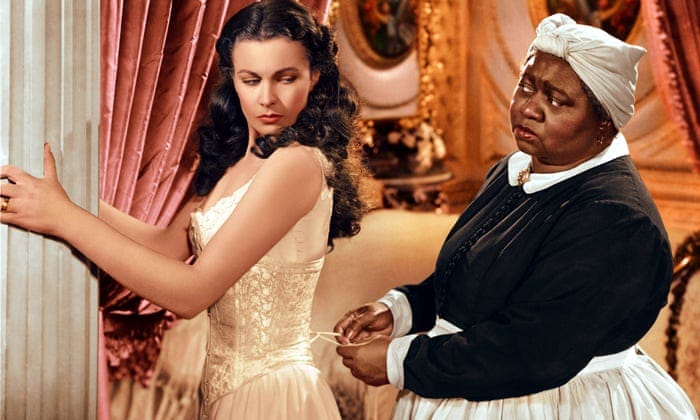
Consider Gone With the Wind, often described as “deeply problematic.” This is true in the modern sense of the word. Many find Mitchell’s portrayal of happy slaves on a bucolic plantation to be deeply offensive caricatures.
Our understanding of Uncle Tom’s Cabin is no less complicated. Today “Uncle Tom” is used as a grievous insult. But Harriet Beecher Stowe was a committed abolitionist who created the character to evoke sympathy and moral outrage among her readers. Stowe’s Uncle Tom was a morally strong, dignified image of Christian virtue by the standards of 1852.
By the early twentieth century, Black activists used “Uncle Tom” to describe other Black Americans they saw as complicit in White oppression. If a work created in good faith, with the explicit goal of ending slavery, can later be understood so differently, it raises an uncomfortable question. Sixty years from today, how will our own moral certainties and good intentions be understood?
Today we can see the stereotypes and oversimplifications that shaped their work. We have a much harder time spotting our own. Stowe drew on the testimony of escaped slaves. Mitchell used stories passed down through her family. Our vision of the Civil War relies on movies, inherited assumptions, and contemporary politics more than the historical record.
An overwhelming majority of Americans would agree that slavery was an unjust, oppressive, and evil system. But in making that judgment, we often flatten the history that surrounds it. The Civil War becomes a morality play, and the Confederacy its cast of villains.
Let’s be clear: the system was indeed monstrous. But the people who sustained it did not experience it that way. Nor did they see themselves that way. Some agonized over slavery. Some justified it by imagining themselves as humane masters who cared for those they enslaved. Many were church-going people who took morality seriously—within the framework they inherited.
Yet they allowed that system to continue.
Does that make them monsters? It is comforting to think so. Declaring someone a monster functions resolves the issue. It removes the need to engage further. But it also removes the need to understand.
And without that understanding, we are left with a simpler story than history can support—and a more dangerous one than we might like to admit. If injustice requires monsters, then we can be confident it belongs to the past. And we can be certain that we would have risen above it.
But what if it can be sustained by ordinary people? By people who believe themselves decent, who act with kindness in their own circles, who never question the system that surrounds them.
Then the question becomes harder. Then we must go beyond condemning what they tolerated in the past. We must ask ourselves what we tolerate in the present.
So how do people ignore atrocities? They don’t. They justify them.
Psychologist Albert Bandura noted that people do not simply tolerate harmful practices; they reframe them as morally necessary, even as honorable. This reframing allows them to preserve their sense of self-worth as they participate in oppressive systems.
Many slaveholders justified slavery as a civilizing influence. In their view, Africans lived in savagery and want. Slavery, they believed, introduced them to Christianity, gave them purpose, and ensured their material well-being. They convinced themselves the slaves were better off in bondage than in freedom.
Others fancied themselves as kindly masters. They made sure their Negroes were well-fed and properly clothed. They made sure the overseers treated them fairly, and never used the whip unless it was absolutely necessary. They reassured themselves that none of their slaves had run away in generations.
In an 1814 letter, Thomas Jefferson wrote to a friend:
[B]ut do not mistake me. I am not advocating slavery. I am not justifying the wrongs we have committed on a foreign people, by the example of another nation committing equal wrongs on their own subjects. on the contrary there is nothing I would not sacrifice to a practicable plan of abolishing every vestige of this moral and political depravity.
What followed was a reframing of “this moral and political depravity.” Jefferson noted that English peasants were as oppressed as American slaves—and there were more peasants in England than slaves in America. He shifts the frame of judgment from the nature of slavery itself to a comparison of relative suffering. Today we call this redirection of blame “whataboutism.”
From a twenty-first-century vantage point, it is easy to see through Jefferson’s argument. It is much more difficult to recognize the same patterns in our own thinking. The fact that we have a word like “whataboutism” suggests that these forms of justification remain persistent habits of mind.
Justification alleviates the consciences of those who support a system. But it does nothing to protect victims. Stalin probably caused more deaths than Hitler; Mao Zedong almost certainly did. But nobody who died in a concentration camp thought “at least Hitler’s not Stalin or Mao.” Nor did any American slave ever say “I sure am glad I’m not an English peasant.”
Harriet Beecher Stowe created Uncle Tom in the image of the abolitionist’s ideal Negro—one shaped more by her moral expectations than by enslaved lives. Only later did we discover that Black people had very different ideals.
Today we recognize “internalized racism.” We seek out Black voices to educate us, just as abolitionists invited escaped slaves to speak at their meetings. We work to eradicate racism like abolitionists fought to eradicate a political and moral atrocity.
But are we any closer to understanding each other?
Good intentions do not eliminate misunderstanding. They can also shape it.
Moral movements attract the deeply committed. They also draw those seeking social clout. Like today’s antiracists, abolitionism had its share of members who wanted to be seen on the popular side of a defining issue. Today we call this “virtue signaling.” But the behavior is not new. And those who repeat slogans frequently often wind up believing them.
But the world as it is and the world reduced to slogans are very different. A movement’s vision of its cause—and of the people it wants to help—is emotionally loaded and simplified. That simplification is inevitable. Movements run on moral clarity, not ambiguity.
What gives a movement its power can also limit its understanding. Reducing a group to heroes can be as misleading as reducing them to villains. Stowe understood the system was evil. She then decided that its victims must be good. And so she recast them in her image of the “good Negro.” That pattern has not faded.
On March 19, 2007, David Ehrenstein wrote a Los Angeles Times Op-Ed about Barack Obama entitled “The Magic Negro Returns.”
Like a comic-book superhero, Obama is there to help, out of the sheer goodness of a heart we need not know or understand. For as with all Magic Negroes, the less real he seems, the more desirable he becomes. If he were real, white America couldn’t project all its fantasies of curative black benevolence on him.
The language is provocative. The underlying idea is not. The individual becomes a symbol. He is no longer seen as he is, but as he is needed.
In “Eating the Other,” bell hooks talks about how People of Color can become a fetish in both the sexual and magical sense. They not only represent the Other; they are seen as a source of primitive power and innocence in the tradition of Rousseau’s Noble Savage. As hooks describes it:
The contemporary crises of identity in the west, especially as experienced by white youth, are eased when the “primitive” is recouped via a focus on diversity and pluralism which suggests the Other can provide life-sustaining alternatives.
The form changes. The pattern does not. The Other is no longer feared or dominated. He is idealized, desired, and asked to provide what the self feels it lacks.
We do not just misunderstand each other. We assign each other roles.
I was born a year after the Civil Rights Act passed. The people who remember colored water fountains and whites only luncheonettes are now in their late sixties or older. Within a few decades, segregation will pass out of living memory. It will no longer be remembered. It will be taught.
When that happens, it will change—not in its facts, but in its meaning.
The Civil Rights struggle was the last battle of the Civil War. The period since then has been a second Reconstruction. As the first Reconstruction’s close left many issues unresolved, so will this one. I will not be there, but many of my readers will.
That process of resolution will not be simple. You will face difficult questions and few easy answers. They will be problematic in the original sense—uncertain, contested, open to interpretation. Many ideas we now call “problematic” will lose the force they carry today. They will pass into history, to be reconsidered rather than condemned.
Other generations will inherit your past, as we did. But they will not inherit it unchanged. They will reinterpret history to understand their present. They will learn of the fires that tore through Atlanta and Gettysburg and Birmingham.
They will see only ashes.