
Spectacle, Scapegoats, and the New Strongman
How power stopped being personal—and became performative

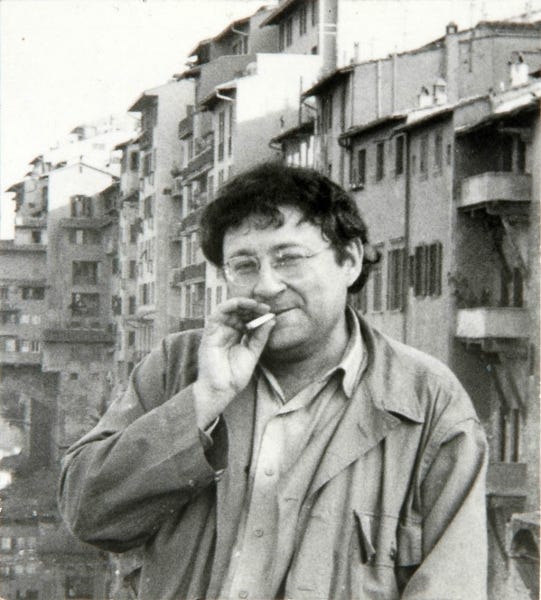
The Spectacle
This society which eliminates geographical distance reproduces distance internally.
Guy Debord, Society of the Spectacle, §167
Published in 1967, Society of the Spectacle has aged better than many of its Marxist contemporaries. Scroll through any social media feed and Debord’s central insight becomes immediately recognizable: modern life is mediated through systems of representation that reshape our understanding of reality. What once read as theory now reads more like a description of everyday life.
But that is no longer the whole story. Debord wrote in the age of television, when the Spectacle appeared primarily as something the individual experienced passively. The viewer watched, absorbed, and internalized a mediated version of reality.
In the age of the Internet, that relationship has shifted. Users can comment in real time, upload their own content, and shape the narratives they consume. The spectator has become a participant in its production. They no longer simply observe the Spectacle. They help construct and sustain it.
Debord’s Spectacle shaped how people understood the world. The Spectacle of social media shapes how they understand themselves. Meaning is no longer just mediated; it is turned inward and made into identity.
In the mid- to late twentieth century, individuals sought to “find themselves.” Today identity is less often discovered than constructed. Individuals assemble labels, affiliations, diagnoses, and interests into a constantly curated and reinforced self. This self is not fixed. It is performed, revised, and displayed in real time.
When identity is performed in public, it must be continuously reinforced through visible signals. While often dismissed as “performative outrage,” these expressions are not necessarily insincere. They are how individuals define themselves within a structure that rewards signs of alignment.
Once identity is expressed publicly, it becomes subject to social reinforcement and correction. As Erich Fromm observed, the fear of disapproval and the need for approval are among the most powerful forces shaping moral judgment. What appears to be conviction is often inseparable from the social rewards and punishments that sustain it.
In this environment, online communities feel unified internally. They provide members with a shared language, shared norms, and a shared moral framework. But that clarity of identity comes with an equally binding clarity of opposition. You learn who belongs by contrasting them with those who do not.
Ultimately, these communities provide an illusion of belonging through exclusion. They are no longer defined by distance, but by shared belief. They operate within a virtual geography that tells you where you stand and what you must do to remain within the group. The camaraderie they offer is grounded in the separation that defines them.
The Spectacle has not overcome separation. It has reorganized it. Social media is driven by visibility and engagement. Distinction is rewarded. The clearer the divide between Us and Them, the easier it becomes to recognize and reinforce one’s own position. Extreme statements attract more attention than moderation.
Over time, these positions harden. Differences that were once ignored become flashpoints. The Spectacle makes separation more visible and more legible. These distinctions become central to how communities and individuals understand themselves and others.
The Spectacle does not simply provide the appearance of community. It also provides the appearance of purpose. Individuals are given roles to perform, norms to enforce, and causes to defend. This produces a sense of moral clarity and engagement, but it remains contained within its own logic.
What feels like action is often a form of participation. It produces recognition and affirmation rather than material change. Participants experience an intense sense of purpose, but that purpose rarely extends beyond the boundaries of the Spectacle. It feels like reality, but operates as something else entirely—what Jean Baudrillard would later describe as a simulacrum.
The Simulacrum

Today abstraction is no longer that of the map, the double, the mirror, or the concept. Simulation is no longer that of a territory, a referential being, or a substance. It is the generation by models of a real without origin or reality: a hyperreal.
Jean Baudrillard, Simulacra and Simulation (1981)
Debord argued that our experience of the real world had become filtered through the Spectacle. Reality still existed, but it was increasingly mediated by the images and narratives presented through television, newspapers, and film. Baudrillard pushed this insight into more unsettling territory.
Writing decades before the rise of the internet, he argued that modern systems no longer represent reality. They replace it. What emerges is not a distorted version of the real, but a self-contained collection of signs that can be endlessly recombined and reinterpreted.
Meaning is no longer anchored to lived experience. It is generated internally through the interaction of symbols, categories, and narratives. What matters is not whether something corresponds to reality, but whether it is recognizable and legible within the system itself.
Within the simulacrum, identity is assembled, performed, and validated internally through labels and signals. Its foundations lie in virtual spaces rather than lived experience or external reality. Participants come to understand themselves through the responses of other constructed selves.
The Collective Strongman is not a person, a leader, or an institution. He is a distribution of signals that produces authority. Approval is expressed through praise, and disapproval through callouts. There is no central source, no founding principle, and no external legitimacy. The Collective Strongman is the group—and the group is the Collective Strongman.
The community exists less as a unified group than as shared signals, language, performance, and enemies. Its guidelines and political stances function not only to express beliefs, but to distinguish members from non-members. The outrage feels real, but it remains largely self-contained. What matters is not what is done, but how it appears.
Baudrillard notes that systems often sustain themselves by invoking their own negation. The threat of collapse, oppression, or catastrophe keeps members active and engaged. It also provides meaning: to be targeted suggests that one’s beliefs matter, that one poses a threat to opposing forces. This can be deeply compelling to individuals who feel marginal or unheard.
From outside the system, those fears may look exaggerated or implausible. But that makes them an especially effective sorting mechanism, separating believers from outsiders. Those who deny the danger are not merely mistaken. They may be seen as complicit in it, or indifferent to its consequences. To express doubt is to risk marking oneself as an outsider. It becomes easier to remain silent, and over time, to internalize the prevailing beliefs.
Baudrillard argues that Debord’s Spectacle has begun to dissolve. The Spectacle depends on a distinction between the medium and the audience, between what is shown and who is watched. But the medium is no longer identifiable as something separate from the social world. It becomes diffuse, embedded, and inseparable from everyday interaction.
This marks a shift from observation to participation. Individuals are no longer merely spectators of a mediated reality. They become its medium. The system no longer stands apart from them. It operates through them.
Drawing on Marshall McLuhan, Baudrillard further suggests that the distinction between medium and message has collapsed entirely. The medium and the real have fused. What remains is not a channel through which meaning passes, but a closed loop in which meaning circulates.
There is no external point from which it can be challenged or corrected. Criticism, dissent, and reform all take place within the same structure that produces the conditions they seek to oppose. The system absorbs them, incorporates them, and continues. What appears as opposition functions as reinforcement—and as a target.
The Scapegoat

Almost no one is aware of his own shortcoming. We must question ourselves if we are to understand the enormity of the mystery. Each of us must ask what his relationship is to the scapegoat. I am not aware of my own, and I am persuaded that the same holds true for my readers. We only have legitimate enmities. And yet the entire universe swarms with scapegoats.
René Girard, The Scapegoat
René Girard observed that belief is often shaped less by independent reasoning than by mimesis, or imitation. Individuals adopt the views of those around them, especially when reinforced by trusted peers. Over time, these shared beliefs become self-reinforcing.
This dynamic becomes especially potent when combined with fear. A vague or impersonal threat is difficult to grasp. A visible enemy is not. The identification of that enemy provides both an explanation and a target. It transforms uncertainty into conflict, and conflict into meaning.
You might think that manifests as fear of the Other, but that’s not always the case. According to Girard, “persecutors are never obsessed by difference but rather by its unutterable contrary, the lack of difference.” Through mimesis, individuals begin to mirror one another. Cultural and behavioral distinctions blur, along with the boundaries that define identity.
This loss of distinction produces anxiety. Fear restores it. By drawing a sharp line between Us and Them, communities reestablish a sense of order. When combined with external stress—a bad harvest, a plague, a crime—this process can escalate. Those who were once neighbors become scapegoats, threats that must be eliminated to restore stability.
It’s tempting to write these incidents off as relics of a darker, more ignorant time. But Girard doesn’t let us off that easily. He reminds us that the witch hunters and pogrom leaders were convinced their targets were guilty. And he notes that each of us believes that our opponents have superstitions while we have justified enmities.
Such beliefs sustain themselves not only through shared conviction, but through the inability to recognize one’s own participation in them. We assume ourselves too rational to fall for such patterns. Yet when a narrative is sufficiently compelling—or the stakes feel sufficiently high—it becomes easier to accept than to question.
René Girard traces this pattern back to some of the earliest myths. In the story of Oedipus, a plague afflicts the city, and the search for its cause leads to the revelation of hidden crimes—parricide and incest. Once the truth is exposed, punishment follows, and with it the restoration of order.
To its original audience, this progression was not merely dramatic. It was logical. Catastrophe demanded explanation, and explanation demanded guilt. Guilt, in turn, demanded punishment. Only through the identification and expulsion of the guilty could the community hope to restore balance.
What is striking in the present moment is not simply the persistence of these patterns, but their intensity. Accusations of hidden evil and extreme wrongdoing circulate with increasing frequency and confidence. They are repeated, refined, and amplified until they take on the weight of established truth.
At first glance, many of these claims appear too implausible to take seriously. But their implausibility is part of what gives them force. They are not merely explanations. They are markers of belief.
The extremity of the accusation draws a clear boundary between those who belong and those who do not. It resists moderation, because moderation weakens distinction. What begins as rumor or speculation can, through repetition and reinforcement, come to feel not only plausible but inevitable.
The belief does not spread because it is true. It spreads because it is shared. And once belief and identity are stabilized, they no longer require reinforcement from above. They are simply lived from within.
The Panopticon
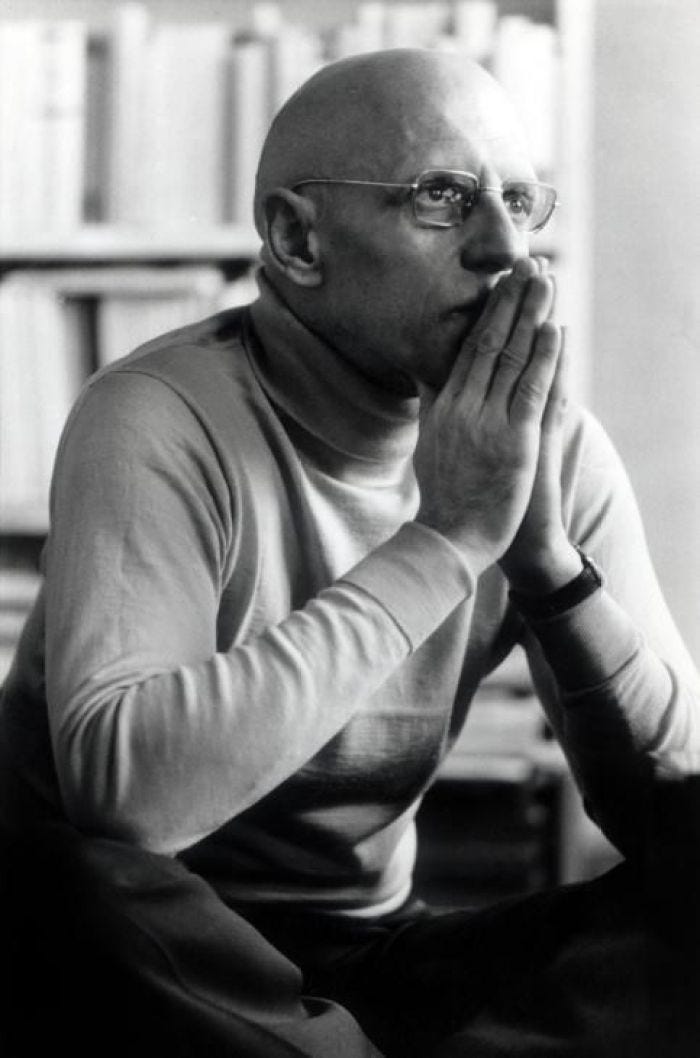
The efficiency of power, its constraining force have, in a sense, passed over to the other side—to the side of its surface of application. He who is subjected to a field of visibility, and who knows it, assumes responsibility for the constraints of power; he makes them play spontaneously upon himself; he inscribes in himself the power relation in which he simultaneously plays both roles; he becomes the principle of his own subjection.
Michel Foucault, Discipline and Punish
Dungeons traditionally kept convicts locked away in darkness. Cells segregated prisoners from guards and from each other. Jeremy Bentham proposed something different: constant visibility. In his panopticon, guards had a constant, clear view of every prisoner.
Michel Foucault describes how the panopticon serves to induce “a state of conscious and permanent visibility that assures the automatic functioning of power.” Its effects are continuous even when observation is not. Individuals regulate their behavior because they may be seen.
Social media participants who violate moral norms may find themselves “doxed.” Their identities may be exposed, their words circulated beyond their original context, and their misdeeds brought to the attention of employers, acquaintances, and the virtual mob. The online pillory serves to set boundaries. Discourse is shaped in advance by the awareness that anything said may be seen, recorded, and judged.
This structure no longer requires a central observer. It operates independently of any single authority. Participants become both subject and enforcer, caught up in a system of visibility and judgment that they themselves sustain.
Foucault notes that the subject “assumes responsibility for the constraints of power… he becomes the principle of his own subjection.” The individual no longer simply responds to authority. He carries it within himself. The enforcement of norms becomes automatic. Power persists not through force, but through the anticipation of judgment.
The Spectacle no longer stands apart from its audience. The simulacrum no longer requires a reference point. The enforcement of norms no longer depends on a central authority. Visibility produces behavior. Behavior reinforces norms. Norms shape identity. Identity, in turn, sustains the system that produced it.
Authority is no longer concentrated in a single figure, but distributed across the network itself. The Collective Strongman emerges from this process—not as a person, but as a pattern. He has no voice, yet speaks through millions. He has no will, yet enforces conformity. He is not imposed from above, but generated from within.
The structures we inhabit today do not simply constrain us. They are sustained by us. We participate in them, reinforce them, and carry them with us. Power no longer needs to be imposed. It persists because it has been internalized and distributed among those it governs—until it no longer appears as power at all.
The Spectacle mediates reality. The simulacrum replaces it. The scapegoat stabilizes belief, and the panopticon internalizes control.
Power is no longer imposed from above, nor embodied in a single figure. It is distributed, enacted, and sustained through participation.
The Strongman has not disappeared. He has been collectivized.