
The Age of Self-Definition
How a theory of inequality became a language of identity

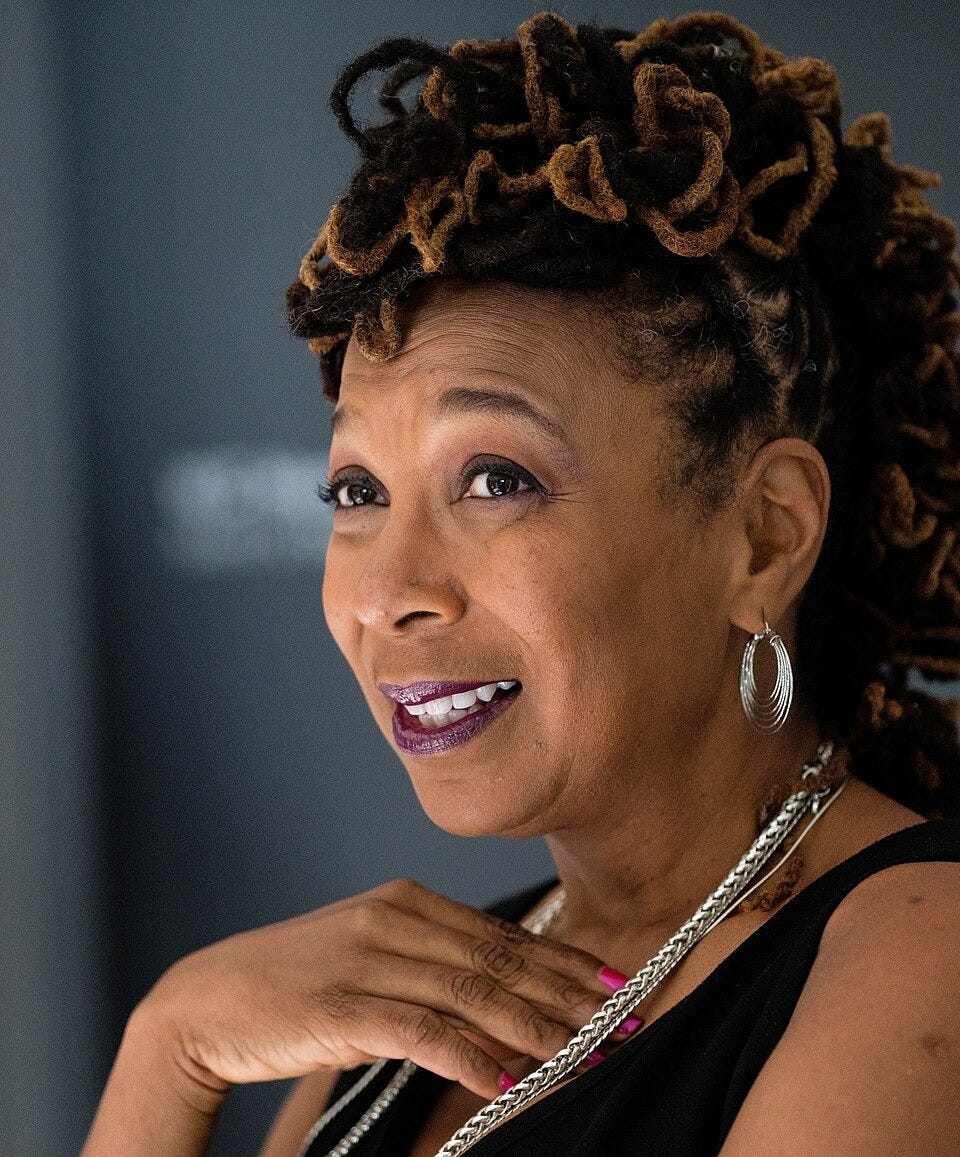
In 1989 Kimberlé Crenshaw published “Demarginalizing the Intersection of Race and Sex.” Her paper examined how Black women could be marginalized in ways that were not captured by legal frameworks treating race and sex as separate categories. It also coined a new phrase: Intersectionality.
What began as a legal framework for analyzing inequality would, over time, take on a broader cultural role—shaping not only how people understood society, but how they understood themselves.
More than two decades later, Dr. Crenshaw offered a broader definition in a 2015 Washington Post article:
Intersectional erasures are not exclusive to black women. People of color within LGBTQ movements; girls of color in the fight against the school-to-prison pipeline; women within immigration movements; trans women within feminist movements; and people with disabilities fighting police abuse — all face vulnerabilities that reflect the intersections of racism, sexism, class oppression, transphobia, able-ism and more. Intersectionality has given many advocates a way to frame their circumstances and to fight for their visibility and inclusion.
Crenshaw’s 1989 article was a dense, citation-packed academic paper. At the time, the concepts she was developing circulated largely within legal scholarship and a relatively small academic audience. Racism was widely recognized as a social issue, and people had strong views on the subject. But the analytical frameworks Crenshaw employed had not yet spread far beyond those circles.
A few years after Crenshaw’s article, Bill Maher began hosting Politically Incorrect. From 1993 to 1996, Maher and guests shared their thoughts on Comedy Central; in 1997 the show was picked up by ABC. While the show skewered sacred cows of all political affiliations, it leaned center-left/libertarian. Its critique of “political correctness” tended to focus less on racism or inequality than on perceived constraints on speech and expression.
By 2015, when Dr. Crenshaw released her Washington Post essay, that had begun to change. Discussions of intersectionality were appearing in mainstream media, and events like the 2017 Women’s March sparked broader debates about diversity within feminism. But though Crenshaw’s ideas were now widely read, they were often simplified, reinterpreted, and misunderstood by adherents and critics alike.
In 2017, many of the legal barriers against women’s equality had been dismantled. Women could open bank accounts and pursue careers that were barred to earlier generations. The issues that remained were more diffuse and harder to observe. Glass ceilings are not nearly so visible as barred doors, even if they are no less real.
As intersectionality became more widely known, it shifted from an analytic tool to a framework used to interpret personal experiences. Crenshaw originally saw it as a way to inform legal and political action. For a new generation, it became a framework for creating meaning.
In this form, intersectionality provided a language through which individuals could describe and present their identities for themselves and to others. Gender, sexual orientation, and disability became not only axes of oppression but markers of identity. In 1969, Carol Hanisch argued that “The Personal is Political.” By the late 2010s, the political was becoming increasingly personal.
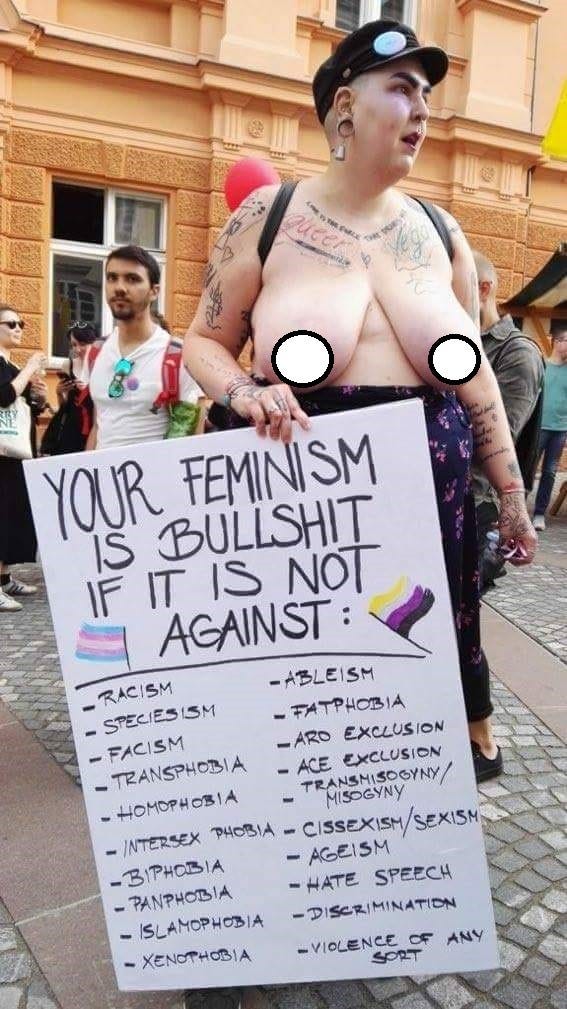
As intersectionality moved from analysis to interpretation, it laid the groundwork for political movements organized around identities that functioned as options for self-definition. Gender and sexuality were once treated as ways of describing roles and behavior. Today, they are more often understood as self-defined markers through which individuals express and define themselves and their lived experience.
In medieval Christianity, salvation was mediated through visible and repeatable practices. Sacraments, confession, and penance provided structure and reassurance. With the Reformation, the emphasis shifted to faith and grace—states that cannot be directly observed or conclusively verified. The result was a new kind of inward search for signs of assurance that could never be fully settled.
The modern language of identity similarly resists external verification, depending instead on self-recognition and affirmation from others. This opens space for self-expression, but can also produce a more diffuse uncertainty as individuals seek confirmation of something that cannot be directly demonstrated.
The quest for selfhood leads to increasingly specific and granular identities. As the number of recognized identities grows, so do the possible combinations. Let’s take a look at the Asexual Spectrum, as viewed by a Tumblr user who identifies herself as:
Maika, she/her sie/ihr, late 20s, aroace, non-sam aro. This is a sideblog for aspec art, experiences, references and history. And memes, can't forget the memes. Strong focus on aro things. If you need something tagged let me know
The Human Rights Campaign defines asexuality as “a complete or partial lack of sexual attraction or lack of interest in sexual activity with others.” The LGBTQAI+ Wiki defines aromantic as “people who do not experience romantic attraction, or experience little-to-no romantic attraction.” A non-SAM aro is “simply and only aromantic, and does not identify with any asexual or allosexual identity.”
At first glance, Maika’s identification as both “aroace” (aromantic asexual) and “non-SAM aro” might appear contradictory. But as the Wiki explains, individuals may reject the split attraction model for a variety of reasons: they may find it difficult to distinguish between different forms of attraction, consider one aspect of their identity more salient than others, or simply find certain labels unnecessary or unhelpful.
What appears as inconsistency to outsiders is, from within, an attempt to navigate and articulate a complex internal experience. These terms allow individuals to describe themselves with greater precision while still leaving room for interpretation. Maika encourages readers to provide further information on aspec experiences, offering to tag new concepts as necessary.
The same process that produces increasingly individualized identities also fosters new forms of community. Individuals who adopt these labels form affinity groups organized around shared experiences. Because most use multiple terms to describe themselves, these groups frequently overlap. What results is a network of partially intersecting communities rather than clearly bounded categories. And one thing that binds these groups is a shared sense of marginalization and misunderstanding.
In another Tumblr post, Maika describes this sense of tension:
But despite the invisibility, aspec people are actually doing quite a lot of things that will piss off queerphobic, right-wing and religious people (and hell, even left-wing people). And the most obvious point is that we are actively not performing heterosexuality the way they want us to.
People who's entire world view is "cis men and women should be in monogamous, heterosexual marriage and have (white) babies" are not going to lean back and say "oh but those asexuals and aromantics are fine". They will also hate our guts, and they will come up with all sorts of reasons, including insinuating we're all secretly into bestiality, or mentally ill, or not human, or attention seeking children.
It's just plain old queerphobia, and like all queerphobia, there's no inherent logic to it which you can worm your way out of by "not doing anything".
Many do indeed dismiss these groups as “attention seeking children.” But are these posts rooted in attention-seeking behavior? Or are they cries of deep alienation from people who feel disconnected from a hostile mainstream world?
These posts, and the mockery they attract, help to bring the community together. A shared sense of alienation becomes a shared sense of persecution. Criticism and sarcasm further reinforce their feelings that the greater community despises them. Partially intersecting communities begin to sense an ever-present threat, and respond with a very similar set of political beliefs.
So are those fears justified, or is the greatest danger these identities face obsolescence in the face of the next dominant cultural framework?
Earlier societies assigned identities at birth through family, religion, class, and community. Today those signifiers are much less prevalent. We are increasingly called on to define ourselves. One of the ways we do that is by creating our own communities where we can define ourselves with the help of like-minded others.
Self-defined identities may disappear from view like the Pet Rock. They may be emblems of an era the way disco and encounter groups defined the 1970s. Or they may continue to grow and thrive as young people define themselves in a digital world. Whatever happens, the underlying current that spawned these identities will remain: the human need to understand ourselves and to be understood by others.
Today identity is no longer simply inherited. Instead, it is constructed and socially mediated. How might it continue to be formed, stabilized, and contested?
Some terms will fall out of fashion. In the 19th century homosexuals were called “Uranians” and “Sapphists.” By the 20th century they had become “pansies,” “dykes,” and “friends of Dorothy.” The slur “queer” has been repurposed today to represent sexuality that differs from the “cishet” norm. And just 25 years ago the word “cishet” would have been greeted with a blank stare.
Other terms will survive. The Merriam-Webster Dictionary now lists “Asexual” as an identity beneath “asexual plants” and “asexual reproduction.” Some will be saved for posterity by movies or by a popular influencer or celebrity who “comes out.” While there is currently some controversy and pushback, we are likely to see continuing recognition of transgender identities in the future.
The anxiety that underlies many of these identities will not fade. But it may be redirected elsewhere as individuals look for new signifiers. Others will find new ways to express their feelings, or find that their chosen labels no longer apply to the person they have become. And still others will have to decide what their identity means in a world that now accepts it as a given.
In the modern world, we are not only given the option to choose our own identity—we are forced to do so. These new identities are part of an ongoing quest that led mid-20th century Americans on quests to “find themselves” and left Sartre exclaiming that we are “condemned to be free.” Our descendants may not find meaning in labels, belonging in online communities, or recognition in gender flags. But they will still be searching for meaning, recognition, and belonging.