

As of August 20, there is still no official report on the cause of Jason Arday’s death. Many assume suicide. Many also incorrectly assumed that was the case for Sinéad O’Connor and Dolores O’Riordan.
Unless and until the coroner’s findings are released, the simple fact is that we do not know how Jason Arday died. And even then we may never be certain. People are still arguing about the JFK autopsy. Whatever the coroner’s inquest finds, there’s a good chance that there will be opposing theories about what really happened.
Ibram X. Kendi, however, has no doubts about who is responsible for Arday’s death. He knows very well that “The Media Lynched Jason Arday.”
To be a prominent antiracist Black scholar is to know you are a target, almost totally surrounded by resentments.
Prominence is relative. You can be prominent at your university, in your field, in your local community, in your nation, across oceans.
As a prominent Black scholar, you know the attacks haunt and hunt you like a lynch mob.
And then, one day, the attacks are at your door.
The attacks are wielded by racist propagandists, resenting you for shining a light on anti-Black racism. They hope everyone finally picks up their baseless claims. They know that to dim your light is to dim the light on their anti-Blackness.
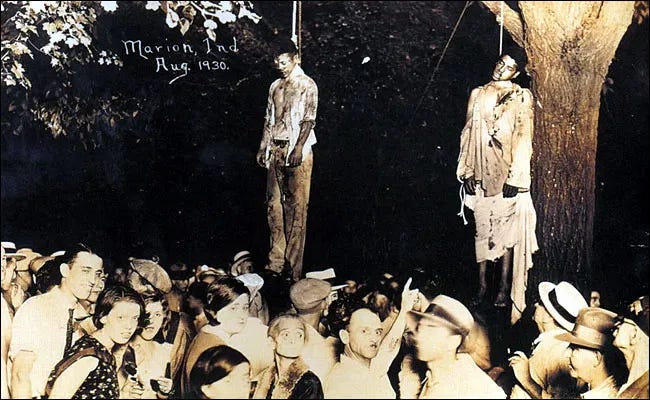
In American parlance a lynching typically involves a mob, or at least a group of people who get together to murder a person who is often but not always black. Kendi is clearly using “lynched” as a metaphor, but were Arday’s critics acting as a mob, and did they actively seek his death and destruction?
So far, the Metropolitan Police have described Arday’s death as “unexpected” but not believed to be suspicious. That means that, at for now, they have no evidence that anybody else was directly involved in his demise. We can argue about the motives of Arday’s critics. We can also ask whether the coverage was excessive, sensationalistic or needlessly cruel.
But Kendi goes several steps further. He accuses journalists who investigated serious questions about a prominent Cambridge academic’s work of being fueled by bloodlust and anti-Black hatred. Uncomfortable scrutiny is reframed as racial murder and legitimate grievances recast as racist propaganda. Jason Arday’s death ultimately becomes a symbol not only of personal grievances but of Ibram X. Kendi’s own battle with “racists” who asked uncomfortable questions.
A similar media pile-on happened to me in the fall of 2023 when I was a professor at Boston University. We had to let some staff go to ensure the financial sustainability of the Center for Antiracist Research, after huge declines in fundraising at a time when many antiracist organizations were being compelled to let people go amid major dips in funding. We gave our staff three months’ notice and severance, and allowed them to spend those next three months looking for a new place of employment. Enraged at me for the layoffs, some staffers retaliated by baselessly accusing me of mismanaging the center.
The university launched an “inquiry” when it knew nothing was there, when it knew I was caretaking a newborn and a partner with stage IV breast cancer. When I was cleared of mismanagement after an audit weeks later, the media suddenly went quiet. There were hardly any reports of this news. It was a miserable time, navigating all these attacks and providing care at home.
A Boston University audit found that the Center for Antiracist Research managed its grants and gifts appropriately. But financial propriety was only one issue under consideration. The employees who “retaliated” against him described a dysfunctional workplace, and there had been complaints long before the layoffs. According to a September 21, 2023 article in the Daily Free Press, Boston University’s independent student newspaper:
The Compliance Services Office received an anonymous complaint in 2021 about the Center from Saida Grundy, an associate professor of sociology at BU and former CAR employee.
The complaint detailed multiple high-level employees leaving suddenly and allegations of a workplace culture that included fear of retaliation and discrimination.
After submitting the complaint, Grundy then personally went to then-Provost Jean Morrison in 2021 to discuss the alleged toxic work culture and grant mismanagement, among other significant concerns. Grundy said she sent a follow-up email after the meeting, and Morrison did not reply.
In his 2019 book How to Be an Antiracist, Kendi explained that there is no such thing as being “not racist.” For him:
The opposite of ‘racist’ isn’t ‘not racist.’ It is ‘antiracist.’ ... One either endorses the idea of a racial hierarchy as a racist or racial equality as an antiracist.
This Manichaean binary elides ideas and actions that do not fit easily into either category. Some have little racial significance; others involve mixed motives or competing principles. Nor does Kendi’s formal distinction between actions and individuals reliably survive in practice. Once a criticism is labeled racist, the label readily attaches itself to the critic as a scarlet letter. But the world is neither simply Black and white nor neatly divided into Black and anti-Black.
I have no identity outside of this. I have never developed one. I have to figure out how to be a person that I don’t believe should exist, and how, as that person, to even begin to heal any of the harm that I’ve caused.
Jessica Krug, “The Truth, and the Anti-Black Violence of My Lies”
On September 3, 2020, Jessica Krug confessed to whiteness on her Medium page. Born a white child to a Jewish family in Kansas City, Missouri, Krug had spent much of her adult life:
under various assumed identities within a Blackness that I had no right to claim: first North African Blackness, then US rooted Blackness, then Caribbean rooted Bronx Blackness. I have not only claimed these identities as my own when I had absolutely no right to do so — when doing so is the very epitome of violence, of thievery and appropriation, of the myriad ways in which non-Black people continue to use and abuse Black identities and cultures — but I have formed intimate relationships with loving, compassionate people who have trusted and cared for me when I have deserved neither trust nor caring.
An associate professor at George Washington University, Krug was polarizing in the classroom. While many students complained about her “non-linear” style of teaching and poorly organized material, others gave her accolades like:
Prof. Krug cares so much about what she teaches and about her students. A lot of readings, but such a rewarding and engaging class. She wants you to really learn and is not a tough grader, but gives a lot of feedback…
This woman is incredible. I'm in awe of the breadth and depth of her knowledge and her commitment to untold histories. Students of color especially--take her. To do well, you really just need to focus on the take-home midterm and final paper. Easy grade but you'll find yourself wanting to go to lecture just to hear her. 10/10 please take this prof.
Krug had also received scholarly praise for her 2018 book, Fugitive Modernities: Kisama and the Politics of Freedom. The book examines communities that emerged in the Kisama region of present-day Angola among people fleeing expanding states, Portuguese colonial violence and the transatlantic slave trade. For Krug, Kisama was more than a geographic designation or ethnic identity. It developed into a political language of fugitive resistance that crossed conventional boundaries of territory and ancestry. As South African reviewer Mahvish Ahmad described her vision:
Kisama is a meme. It is an imitated practice that circulated among communities on the run from African and European authorities alike as well as voracious slave-traders. It is an idea that circulated among fugitive communities surviving five centuries and the violent Middle Passage between West Central Africa and the Americas.
Krug insists that unpacking what exactly Kisama is requires a radical break with how historians and anthropologists of Africa and the African diaspora have approached such places and peoples.
But Krug’s constructed identity was about to unravel. On August 26, 2020, an anonymous scholar texted two acquaintances about a former friend who had claimed at different times to be of Algerian, African-American, and Latino descent. A few days later, they found the obituaries of Krug’s parents and discovered her roots.
According to Yomaira C. Figueroa-Vásquez, an associate professor of Afro-diaspora studies at Michigan State University, “We were not trying to ruin her life. We were really thinking, as Black Latina women, how do we do this ethically?” They had no plans to go public or to alert GWU. All they wanted was for Krug to apologize and stop lying. But upon learning of their research, Krug released her post and, on September 9, resigned from her position effective immediately.
I have no interest in defending Krug; she acknowledged that her behavior was indefensible. The international attention she received was overwhelmingly critical and she received far less support from her university than Jason Arday received from his. As with Arday, I find that many of the attacks on Krug were overheated and theatrical. But in neither case would I call the critics a lynch mob.
Krug subsequently withdrew from public view. I do not know where she is or what she has done since resigning, and I see no reason her privacy should not be respected. She admitted her deception, relinquished her academic position and clearly recognized the gravity of her conduct.
What interests me is the issue that the public rituals of prosecution and defense tend to obscure. Many people have wanted either to condemn Krug and Arday as liars or to defend Arday as the victim of persecution. Comparatively few have asked the more difficult question: What drives a person to construct a public identity that departs so radically from the life that person has actually lived?
Jason Arday, Ibram X. Kendi, and Jessica Krug each had incentives for their behavior. Arday’s colorful stories of his rise from adversity helped make him a star academic. Kendi’s focus on racist behaviors and actions was not infrequently used to dismiss critics. Krug’s race-shifting gave her added gravity and respect in her chosen field. But in each case there appears to have been more going on than a simple grift.
Arday was neurodivergent. While his tales of being mute until 11 and illiterate until 18 have been seriously challenged, they were not pulled out of thin air. Those tales made him an appealing figure for those seeking a magical negro who rose out of adversity. But they also helped shield Arday against his awkwardness and self-doubts.
Krug has described childhood trauma and family alienation. Her sister-in-law told reporters Krug has been estranged from her brother for 20 years, and she is “not welcome in their household.”
In How to Be an Antiracist, Kendi recalls a speech he delivered at an oratorical contest. Before a predominantly black audience, he criticized black youth for embracing destructive behavior. Young Kendi’s speech was in keeping with a tradition stretching from church pulpits to graduation ceremonies: value education, discipline yourself, care for your family, quit glorifying conduct that destroys your own community and stop giving a hostile society ammunition against you.
But Kendi later dismissed that speech as the product of his internalized racism. He felt that by distinguishing himself from his supposedly deficient peers, he had strengthened his own self-esteem and gained “a sense of self” by stepping on the heads of other black people. His later work was not just an academic theory. Like Krug and Arday, he was repudiating someone he once had been.
These facts do not exonerate any of them from blame. But they may help us better understand some of the underlying issues. Each might well have had deep shame and sincere convictions. Each might have simultaneously acted out of self-interest and self-loathing. We are a complicated species, and our conduct rarely proceeds from a single cause.
Some DEI critics clearly are presenting the failures of individual black scholars as proof that blacks are dumber and less ethical than white people. It’s not surprising that black scholars and their friends are inclined to circle the wagons and defend those who have come under scrutiny.
But that reaction can also become an overcorrection. Justified criticism can be dismissed as hostility. Scrutiny becomes evidence of hate. Journalists become a lynch mob. And the vulnerability, alienation, and self-doubt that leads the target to inhabit a false life goes unaddressed until the protective edifice comes tumbling down.
While I have not yet read enough of Arday or Kendi to comment on their work, I have read Fugitive Modernities. It was a solid effort. Krug offered a novel account of Kisama as both a community and a political idea: a tradition of fugitive resistance formed among people fleeing states and slave traders in Angola, then carried across the Atlantic and adapted within communities in Brazil and present-day Colombia.
I mourn the books Jessica Krug might have written, and the life Jason Arday will never live. We are poorer in both cases. Two bright, gifted people felt their gifts were not enough. In the classical pattern of tragedy, both protected themselves with behavior that ultimately led to their downfall.
Arday is beyond our condemnation or forgiveness. Krug has judged herself, found herself wanting, and retreated into post-academic anonymity. I hope she has learned to live as the person she once believed should not exist. And I pray that both have found some measure of the peace that eluded them for so long.