
The Delegitimization Spiral
How Governments Lose Legitimacy—and What Replaces Them

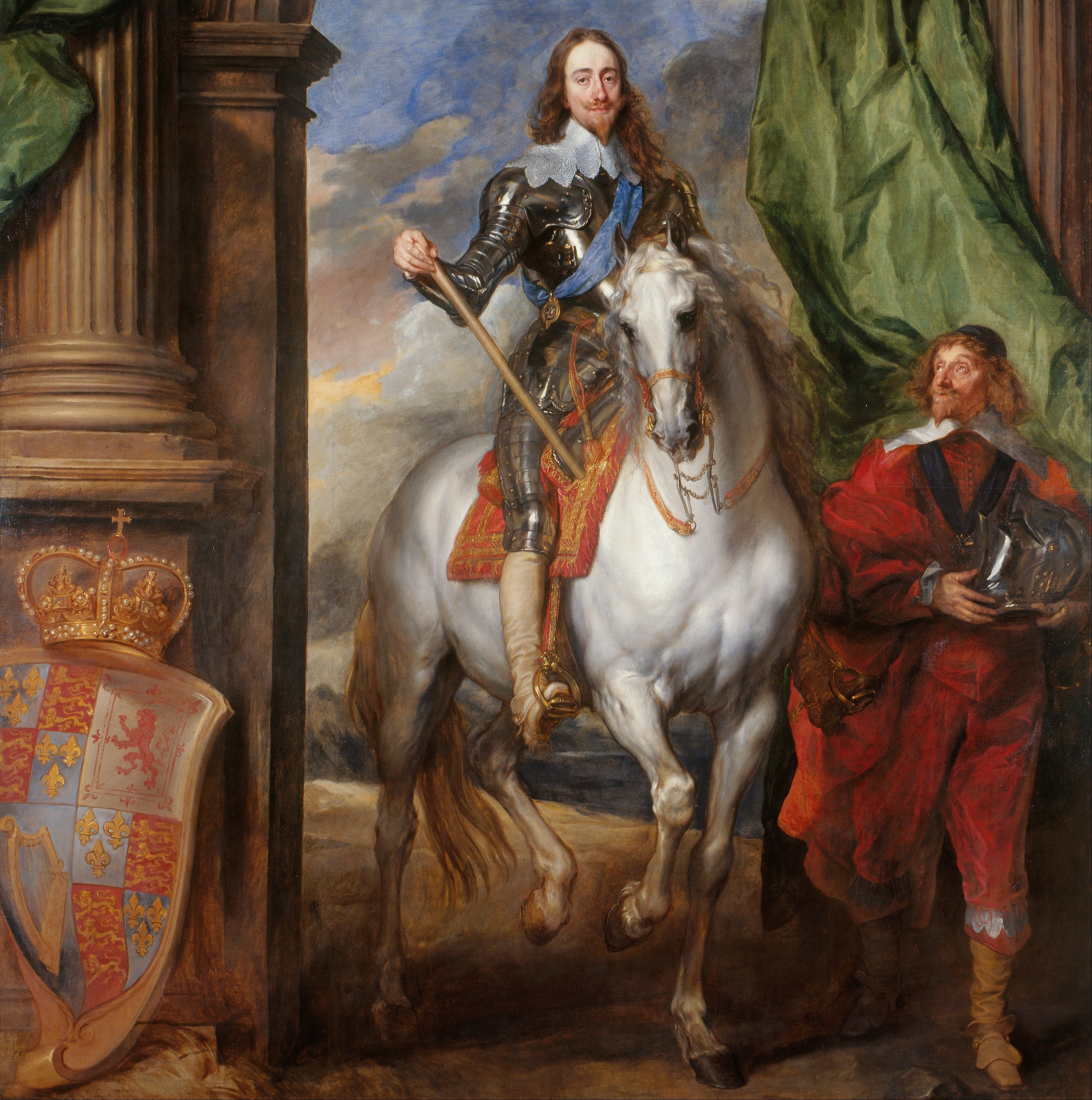
In the early 17th century, the Parliament of England was summoned at the monarch’s request. When he saw fit, the King could dissolve the Parliament. But the gentry who made up Parliament controlled taxation, as the Crown depended on their consent to raise significant revenue. While there was often friction between them, the arrangement held so long as each side observed established norms and limits.
Shortly after ascending to the throne in 1625, Charles I married Henrietta Maria. A French Catholic, the new queen was bound to arouse suspicion among the staunchly Protestant English. Equally troublesome was the king’s deep friendship with George Villiers, 1st Duke of Buckingham, a favorite who had also been influential under King James I. Buckingham was notorious for his lavish spending and was widely seen as corrupt and incompetent.
Concerns about constitutional issues and failed wars in Spain and France—as well as perceived royal extravagance—led Parliament to hold the purse strings firmly. In 1625 Charles I dissolved Parliament due to conflict over war funding and taxation. In 1626 he called another Parliamentary session, only to shut it down after members moved to impeach Buckingham.
Facing mounting financial pressure, Charles imposed a series of “forced loans” on wealthy subjects. Those who refused to pay were imprisoned without trial, provoking widespread resistance among the gentry. A cash-strapped Charles was forced to call a third Parliament in 1628. But relations between the Charles and the gentry had deteriorated to the point where Parliament felt compelled to issue the Petition of Right, condemning the King’s behavior and invoking principles that stretched back to the Magna Carta.
Charles formally accepted the Petition of Right, but his compliance was nominal at best. In 1629, he dissolved Parliament and began raising revenue through alternative means. Parliament would not be called again for eleven years.
Charles knew he could not fight a major war without parliamentary approval. So long as he avoided new foreign conflicts, he had no pressing reason to call another session. A decade of relative peace was attractive to a nation with a long history of costly wars—and a king who had already been drawn into unsuccessful conflicts in Spain and France. Resentment still simmered, but it remained contained.
In 1637, tensions erupted in Scotland over religious differences. The Presbyterian Scots felt that the High Church Anglicanism espoused by Charles was uncomfortably close to Catholicism; Charles saw their system of church governance as a threat to both Church and Crown. When he attempted to impose a new Book of Common Prayer on Scotland, it provoked widespread riots. By 1639, England and Scotland were embroiled in the First Bishops’ War.
Efforts to fund the conflict via alternate means proved unsuccessful. By 1640, Charles found himself left with no alternative but to summon Parliament. But the parliament refused to vote subsidies unless royal abuses were addressed. On May 5, three weeks after it was called, Charles once again dissolved the “Short Parliament.”
Public resistance was no longer confined to Parliament. A threatening crowd gathered outside Lambeth Palace and targeted William Laud, whose religious policies had made him deeply unpopular. Many English observers felt that his reforms were too hierarchical, too ritualistic, and too Catholic. Some found themselves drawn to the growing Puritan movement, particularly its strong anti-corruption and anti-popery stances.
By November, Charles I summoned what would become known as the Long Parliament. The King was now negotiating from weakness. He needed money and legitimacy, and parliament had little interest in granting him either.
Thomas Wentworth, Earl of Strafford, had been an early critic of royal overreach, but later became one of Charles’s most trusted advisors. As Lord Deputy in Ireland and later as the King’s military advisor, he became known for his harsh and uncompromising rule. Within months of Parliament’s opening, Strafford was impeached.
When a conventional conviction proved uncertain, Parliament passed a Bill of Attainder declaring him guilty of treason. Charles, under intense pressure, reluctantly signed it. On May 12, 1641, Strafford was beheaded. Outside the palace, crowds shouted abuse at the Queen and her children. Disputes over policy were fast becoming questions of legitimacy.
On November 22, the House of Commons passed the Grand Remonstrance, a list of over two hundred separate points of objection. Among its demands were the removal of bishops from positions of political influence and parliamentary oversight over Crown appointments. The Grand Remonstrance also criticized William Laud, the Archbishop of Canterbury, who was implied to be part of a Roman Catholic conspiracy.
King Charles I received a copy on December 1 but initially remained silent. After Parliament published the Remonstrance, Charles issued a public response on December 23. He refused to expel the bishops and, while affirming his opposition to Roman Catholicism, insisted on defending the Church against what he called “schismatics.”
On January 4, 1642, Charles entered Parliament to arrest five MPs for high treason. By the time he arrived with armed men, the MPs had already fled. Charles asked where they were, but Speaker of the House, William Lenthall, replied.
May it please your majesty, I have neither eyes to see nor tongue to speak in this place but as this House is pleased to direct me whose servant I am here; and I humbly beg your majesty’s pardon that I cannot give any other answer than this to what your majesty is pleased to demand of me.
With that refusal, Lenthall made it clear that his loyalty was with Parliament rather than the King. When Charles issued a proclamation ordering the City of London to hand over the MPs, he was met with refusal from city officials and legal authorities alike.
On January 10, Charles left London for York. The next day the Five Members travelled back to Parliament on a barge accompanied by the cheers of citizens. But what looked at first like a decisive triumph did not restore unity—it exposed how little agreement remained. The Parliament split between moderates who sought a negotiated settlement with the King and radicals who believed he could no longer be trusted. Among the people loyalties divided along regional and religious lines.
King Charles hoped he could take advantage of these divisions to regain control. By August 1642, he had raised an army, and the First English Civil War began.
Royalist Cavaliers fought Parliamentarian Roundheads to an inconclusive battle at Edgehill in October. In 1643, Royalist forces controlled much of the north and west, including Oxford. But Charles suffered a setback at Marston Moor in July 1644, when Parliament, allied with the Scots, secured a decisive victory that gave them control of northern England.
The final blow came in June 1645, when Oliver Cromwell’s New Model Army, a disciplined force of professional soldiers, crushed the Royalist army at the Battle of Naseby. Among the spoils was correspondence between Charles and foreign leaders, including Catholic powers. This revelation did serious damage to what remained of the King’s credibility. In 1646, he surrendered to the Scots.
Killing a king was nothing new; many kings throughout history have come to bloody ends. But putting your king on trial and executing him as a criminal was something very different. Now that they had Charles, the Roundheads were not entirely sure what was to be done with him.
Charles used that uncertainty to leverage tensions between Parliament and the New Model Army. To Parliament, he suggested he might agree to a restoration under a Presbyterian settlement. To the Army, he hinted at greater religious toleration, along with payment of arrears, indemnity for actions taken during the war, and limits on arbitrary royal power. But his promises were vague, and his track record had left both sides deeply distrustful.
Charles offered still another settlement to the Scots. The king who had fought a war over the Book of Common Prayer now agreed to support a Presbyterian settlement across England and Scotland and the suppression of religious dissent. In summer 1648 a faction of Scots “Engagers” invaded England and triggered the Second Civil War. But Scotland’s warriors were no match for the New Model Army. By August, the King’s last hope was decisively defeated.
Some parliamentarians were still open to discussions with Charles and a restored monarchy under new rules. But most now saw Charles as an untrustworthy traitor. In December, a force under Colonel Thomas Pride took control of Parliament and forcibly detained MPs who were seen as enemies of the New Model Army or friends to the King. After “Pride’s Purge” a hand-selected group of judges and parliamentarians approved the King’s execution order. A majority of MPs and judges declined to participate in what they saw as regicide.
On 27 January 1649 the remaining members of the High Court of Justice declared Charles guilty of attempting to “uphold in himself an unlimited and tyrannical power to rule according to his will, and to overthrow the rights and liberties of the people.” On January 30, he was beheaded. The King was not overthrown in battle but condemned in law—a transformation that marked the final collapse of his legitimacy.
Could 21st century America see a similar delegitimization spiral? There are many differences between our world and 17th century England, but we still rely on the legitimacy of our authority figures. What follows is not a prediction. It is simply an attempt to imagine how the English Civil Wars might play out in our place and time.
President Charles Stuart took office under a cloud of suspicion. That was to be expected; the last several elections had been dogged by allegations of fraud, vote suppression, and foreign interference. Stuart’s wife, Hien-Mei Chen, was the daughter of one of China’s wealthiest tycoons. Some speculated, or asserted outright, that the CCP had rigged voting machines to ensure a pro-Chinese puppet came to power.
Most dismissed these claims. In a deeply polarized America, every election was contested by partisans from the losing side. After long years of online outrage, many avoided political discussions altogether. Voting rates were at their lowest in decades; every year, more decided that elections weren’t worth their time and effort.
Stuart’s rise to the Oval Office was funded in large part by his family trust and his wealthy friends. This did not sit well with Americans concerned with income inequity. George Buckingham, a close confidant of the Stuart family, became an easy target for critics who mocked his conspicuous consumption and blustering arrogance. For some, Hien-Mei’s background raised concerns about foreign influence. Others saw her and Stuart’s circle of companions as part of a distant, insulated political elite.
After a disastrous military attempt to free a Nigerian oil field from rebel forces, confidence in Stuart plummeted. Members of the opposing party called for his impeachment; since every president in the last five administrations had been impeached at least once, this barely raised an eyebrow. But when several of the congressmen who had led that call were arrested on charges of tax fraud and corruption, the public began to take notice.
The argument split among party lines. Stuart supporters saw his actions as a bold move to root out crooked politicians. Opponents saw the arrests as politically motivated intimidation efforts. Many shrugged and noted that all politicians were crooks anyway.
A federal judge ordered the release of the arrested congressmen. Stuart, noting she was placed in office by the opposing party, refused to comply and issued an executive order removing her from office. When she refused to leave, he had her forcibly escorted from the building by Secret Service agents. Opinion was divided as to whether this was an attack on judicial overreach or an executive takeover.
A few days after the judge’s removal, George Buckingham was shot and killed outside his home; the shooter was killed immediately thereafter by Buckingham’s security detail. Several congressmen openly celebrated his death. Clips of their remarks were pulled from CSPAN and circulated widely. Each side used them as proof of the other side’s corruption and of its own righteousness.
Stuart expressed his disgust with this behavior and used the moment to restrict access to congressional proceedings. Broadcast coverage was suspended, and reporters and guests were barred from recording or sharing footage. From that moment forward, what happened in Congress remained largely out of public view. The shooter’s motivations, and potential ties to any other organizations, remain unclear.
Congressional dialogue grew increasingly heated. To prevent the danger of violence, Stuart passed new regulations demanding that anyone entering the Capitol Building be cleared by an extensive background check. Dozens of lawmakers, and hundreds of congressional employees, failed that screening and were barred from entry. Many journalists noted that the bans appeared targeted at the opposition, and at people who had criticized Stuart. Others joked about how many of Stuart’s opponents had an unsavory past.
The opposition withdrew altogether from congressional sessions. They met in spaces owned or rented by supporters and broadcast their speeches to the world. Members of Stuart’s party continued to attend, but since several of his critics within the party had also been barred, there was no longer a quorum. Legislative business ground to a halt. Congress still existed, but it no longer functioned.
As tensions deepened, many formerly tuned-out Americans began to re-engage with politics. With mainstream news increasingly consumed by sectarian tensions, they turned instead to influencers and independent commentators.
Arnav Bankinala’s Old Models proved increasingly popular. While many online voices still relied on a familiar mix of outrage and accusation, Bankinala spoke in a soft, measured tone and presented complex problems in a clear, thoughtful style. The New York Times called him “the Carl Sagan of political science.” His audience grew steadily, drawn not only to his arguments, but to the sense that he was a coherent voice in an increasingly incoherent political landscape.
Bankinala was a popular guest on mainstream media shows and online livestreams. His first book, named after his podcast, quickly rose to the top of most bestseller lists. His quiet, thoughtful criticism of both parties was frequently quoted and often proved more devastating than a thousand shrieks of rage. Yet even as his influence expanded, he presented himself with deliberate modesty, saying “I only do what an honest man should do. I serve God, my people, and my country.”
The week after his second book was released, Arnav Bankinala was elected to the House of Representatives. As a member of the opposition party, he could have attended their informal gatherings. Instead, he submitted to and passed the background check and took his seat in the Capitol.
While he could not record or photograph the proceedings, he provided nightly summaries to reporters, describing the day’s debates and how they unfolded. His accounts became a primary source of information for many Americans, and his visibility—and credibility—grew rapidly.
Tensions rose that summer with China’s blockade of Taiwan. Stuart’s options were limited, but his inaction raised further concerns about Hien-Mei and his perceived ties to China. In his nightly speech, Bankinala dismissed many of those fears as simple-minded xenophobia. Then he explained how Stuart might have acted earlier to deter the crisis. He concluded, “I do not believe Stuart is a bad leader. He is simply confused.”
As the blockade became a full takeover, Rep. Bankinala’s words were repeated around the world. The phrase took on a life of its own, and the president came increasingly to be defined by it—Charles “Simply Confused” Stuart. When his Capitol access was pulled, Bankinala returned to his home state. There he continued to broadcast from his house, which was surrounded by armed supporters and police officers.
Stuart was enraged, but he knew that detaining Bankinala could spark a battle between state and federal forces. Pro-Stuart influencers accused Bankinala of plotting a coup; Stuart’s party denounced Bankinala’s defenders for sedition. But Bankinala had a wider following and greater trust than the President. He was seen as a voice of reason, while even Stuart’s party was starting to question his judgment.
Under pressure from his party, Stuart revoked the Capitol background check. Bankinala chose not to return, noting that he no longer trusted the president. Many other members of Congress followed his lead. Legislative functions remained fractured as protests continued in major cities.
A few weeks after Bankinala’s refusal, Charles Stuart and his wife traveled to China. He claimed on the tarmac that he was going to work toward securing Taiwanese freedom. As the weeks passed, it became clear he was now in exile. The president had not been formally removed, but he was no longer governing.
The Vice-President attempted to govern in Stuart’s absence, but he had little more credibility than the exiled leader. The opposition party began impeachment proceedings immediately; his own party made it clear they would not defend him. The government remained divided between two warring factions. Only one man had meaningful support across both.
A few days after the Vice President resigned, members of the House from both parties elected Bankinala Speaker. In the absence of a President and Vice President, the office placed him next in line for the presidency. Bankinala accepted the position and was sworn in as acting President.
In the days that followed, federal authorities began removing remaining Stuart loyalists from their posts. Within a week, Bankinala issued an extradition demand to the Chinese Embassy, calling for Stuart’s return to face trial. In the address that followed, he expressed regret at the course events had taken, promised that the country would move beyond this period of instability, and spoke of the “cruel necessity” that had made these actions unavoidable.