
The Medium Chooses the Man
How television made Reagan, social media made Trump, and what that means for the future of leadership

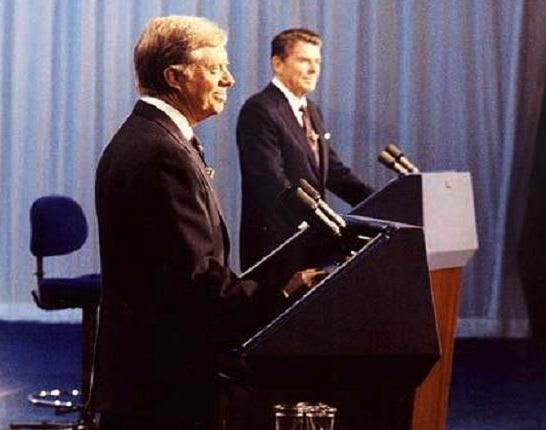
Jimmy Carter was not a stupid man; he trained as a nuclear engineer and brought a methodical, detail-oriented mind to the presidency. He was not a wicked man; even political opponents remembered the former Georgia governor as a man of decency, compassion, and honor. He was not a cynical man; his early struggles with Washington’s pork-barrel culture reflected a genuine discomfort with the transactional side of politics.
But he was not the man Americans wanted during a crisis.
On July 15, 1979, with the country mired in inflation, energy shortages, and a growing sense of drift, Jimmy Carter addressed the nation. In what would later be called the “malaise” speech, he offered not reassurance but a moral and economic diagnosis.
We’ve always believed in something called progress. We’ve always had a faith that the days of our children would be better than our own.
Our people are losing that faith, not only in government itself but in the ability as citizens to serve as the ultimate rulers and shapers of our democracy.
As a people we know our past and we are proud of it. Our progress has been part of the living history of America, even the world. We always believed that we were part of a great movement of humanity itself called democracy, involved in the search for freedom, and that belief has always strengthened us in our purpose.
But just as we are losing our confidence in the future, we are also beginning to close the door on our past.
Carter’s speech was a sober, introspective message. It asked Americans to reflect, to take responsibility, to confront uncomfortable truths.
It was also a political disaster.
Carter’s rough road got considerably bumpier a few months later with the November 4 storming of the Iranian Embassy, followed by the December 1979 Soviet attack on Afghanistan. As interesting times continued, his approval ratings plummeted. Many Democrats worried about the upcoming election. Others still felt sure their man would win. After all, the Republicans were running a man who was most famous for starring in B-movies alongside a chimpanzee.
That’s not to say that Ronald Reagan was unqualified. From 1967-75, he was governor of California. In 1976, he nearly won a primary challenge against incumbent president Gerald Ford. But even in the famously open-minded 1970s, many Americans questioned whether an actor had what it takes to be President. Even more were concerned about Reagan’s 1949 divorce from Jane Wyman.
In the 1980 Presidential Debate, Carter appeared tense and ruffled. His opponent came across as a kindly grandfather. In response to an attack from his opponent, Reagan simply shook his head and said in a genial tone “there you go again.” For many, that was the moment that Reagan clinched the election. Carter spoke frankly about America’s lack of confidence. Reagan offered reassurance.
Twenty years earlier, Richard Nixon’s five o’clock shadow cost him a televised debate against John F. Kennedy. 1980 saw the rise of another telegenic President, one who used his acting skills to soothe a benighted nation. Many saw him as an empty suit or a mannequin mouthing lines. Economists still debate the wisdom of his stimulus package and subsequent deficit spending. But for many Americans, Reagan was the man who made America feel like the bright shining city on a hill.
After Kennedy, we had a series of untelegenic Presidents. Lyndon B. Johnson frequently came across as overbearing and blustering on camera. Nixon’s body language was often read as evasive and untrustworthy, earning him the nickname “Tricky Dick.” And Gerald Ford, a former football player, was seen as a clumsy buffoon thanks in no small part to Chevy Chase’s Saturday Night Live portrayals of “Operation Stumblebum.”
Reagan had spent decades before the camera. He was relaxed during public performance and knew how to move and speak before audiences. He understood timing, framing, and emotional tone.
Television favors clarity over complexity and confidence over ambiguity. It rewards emotional impact more than technical detail, and presence more than depth. An analytical, introspective leader like Carter struggled with TV appearances. Television fit Reagan like a comfortable pair of slippers. He didn’t need to be the most informed candidate, because he was the most watchable one.
Radio was better suited to sustained, difficult argument. Winston Churchill rallied a nation on the verge of war with a broadcast that promised “blood, toil, tears, and sweat.” The medium allowed listeners to sit with complexity and absorb the material over time. Television worked differently. Reagan simplified problems, reassured voters, and left them feeling less anxious than they had before.
Carter might have fared better in the age of radio. Before a camera, he was no match for a trained actor. He brought substantive, policy-driven arguments to the debate. Reagan’s quip was neither informative nor substantive; it was emotionally disarming. But that single, well-delivered line outweighed Carter’s detailed concerns.
Reagan was widely dismissed at the beginning of his run. He was an actor, an intellectual lightweight, not a serious candidate. But all those weaknesses turned out to be strengths in televised politics. A skilled, optimistic communicator with a clear, well-enunciated message was exactly what post-Vietnam America was looking for. Reagan didn’t just win an election. He demonstrated what success looked like in the age of television.
By 2015, the dominant medium had changed yet again. Television was still powerful, but it was centralized and limited. Cable expanded the number of channels and introduced 24-hour news. But the basic relationship remained the same: you watched, and someone else decided what was worth seeing.
With the rise of the iPhone and similar devices, that relationship broke down. Social media became a primary source of information. Instead of choosing between channels, users scrolled through endless feeds in search of content. With phone cameras, you could skip traditional media and watch events unfold in real time. And instead of writing a letter to the editor or calling a station to complain, you could respond, and have your response amplified, instantly.
Television rewarded the most watchable candidate. Social media rewards the most unavoidable one. Provocation draws more attention than reassurance. Speed outruns polish, and conflict travels farther than consensus. A coherent narrative matters less than a viral moment.
It was in this environment that Donald Trump entered the 2016 presidential race.
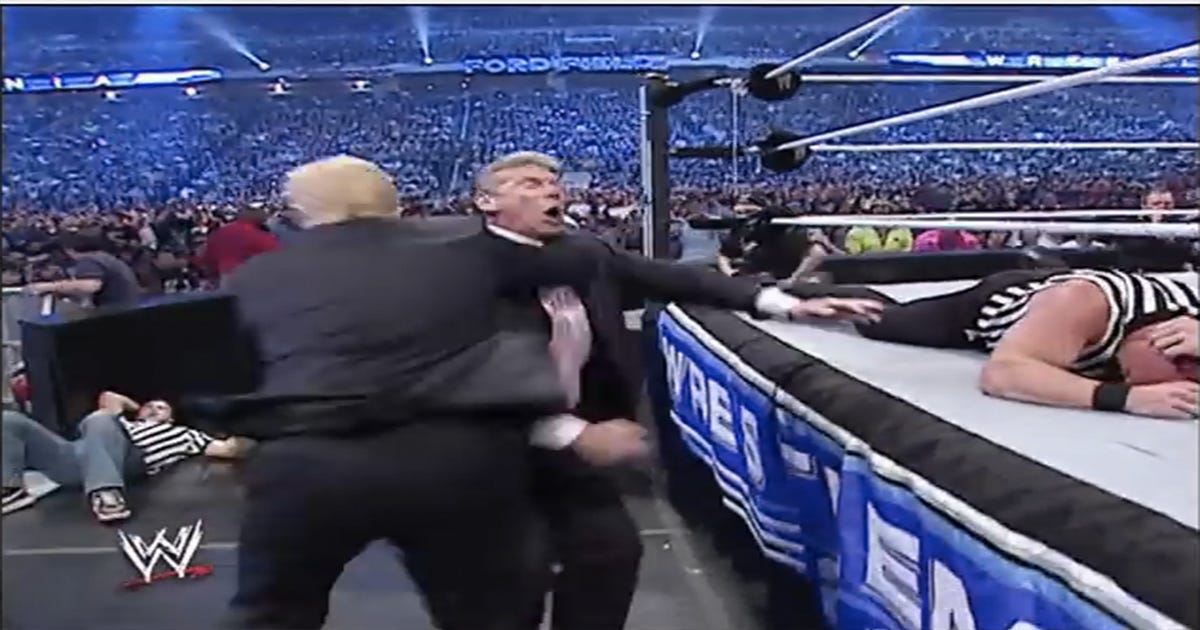
Like Ronald Reagan before him, Trump was widely dismissed. He was best known for barking “You’re fired” on The Apprentice and for clotheslining Vince McMahon at a Wrestlemania event. And unlike Reagan, he had no political background. He looked like an attention-seeker running a publicity stunt, not a serious candidate.
Under the old rules, that would have been disqualifying.
But by 2016, those rules no longer applied.
Trump used Twitter to bring his message directly to the public. He had a natural instinct for attention-grabbing, provocative comments. He wrote short, punchy messages and was constantly sharing his opinion with fans and foes alike. He was as optimized for Twitter as Reagan was for television.
Reagan came to power by being genial and soothing. Few would use those words to describe Donald Trump. But social media doesn’t reward genial and soothing; it favors outrage and controversy. Negative coverage didn’t hurt Trump—it galvanized his followers and further spread his message. Reagan reassured voters; Trump activated them.
Carter and Reagan were mediated by networks. Trump spoke directly to his audience. There were no editors, no filters, and no delay between them. His critics called him brash and undisciplined. His supporters read the same messages and saw authenticity. And those who loved him and those who hated him worked together to ensure that no corner of social media could avoid him.
Trump did not break the system. He revealed what it had become—a system where attention is power, and power follows visibility. Those who were still working within the rules and guidelines of mainstream media dismissed him, then tried desperately but unsuccessfully to contain him. Experience, endorsements, and institutional support were no longer enough to win a presidential election. The new technology favored visibility, engagement, and narrative dominance.
The medium had changed and, once again, it chose the man best suited to it.
We’ve built a system that selects leaders based on their ability to command attention. But leadership involves a very different set of skills. Negotiation and compromise are essential for political success. They are also, more often than not, the kiss of death on social media.
So can serious leaders still win?
Yes, perhaps. But it is much harder than it once was, and it will require adaptation. Serious leaders must now master the art of simplifying without oversimplifying. They must learn how to communicate constantly, and how to live before an audience of fans and hecklers.
That doesn’t mean that quiet coalition-building will go away, or that long-form explanations will become obsolete. They will take place where they always have, in backrooms and at seminars where decision-makers shape policy amidst their peers. But they will not be a pathway to leadership. Politicians who cannot hold attention will be quickly forgotten by their voters.
The problem is not that serious leaders can’t win. It is that before they can govern like adults, they must master the art of campaigning like performers.
Campaigns run on an attention economy. They thrive on speed, provocation, and emotional engagement. They are fueled by easily-remembered slogans and on clear, firm statements. Governance is rooted in institutional reality. It requires patience, compromise, complexity, and long-term thinking. The traits that win elections can actively undermine the traits needed to govern.
Outrage can win you votes, but it makes compromise more difficult once you are elected. Simple slogans can rally a crowd, but they are of limited use when dealing with complex situations. Amidst constant messaging, there’s little time for deliberation.
The printing press, radio, television, social media—each reshaped messaging and perception, and each led to widespread political changes. Our current systems reward outrage, conflict, and emotional spikes. This has resulted in louder candidates, deeper divisions, and increasingly fast information cycles. We worry about polarization. Perhaps we should be more concerned with leadership that has become more optimized for visibility than effectiveness.
Is this the end? It may seem that way. Peasants caught up in the Thirty Years’ War might well have cursed Gutenberg for setting the world afire. The Nazis used cheap Volksempfängern (People’s Radios) to spread their message. And yet, over time, these media have remained important and we have remained committed to our winding and oft-delayed quest for justice and freedom.
The medium will continue to change. So will we, and so will the leaders who rise within it. The challenge is not to escape the medium, but to use it without being consumed by it, to translate complexity into clarity without surrendering to simplicity. Those who can do that will still find an audience.
From radio to television to social media, each shift has reshaped not only how leaders speak, but which leaders can succeed. We do not choose them in a vacuum. The medium we live in helps choose them for us.