How Power Became Faceless—and Why It Matters
Who’s really in charge? It’s not who you think
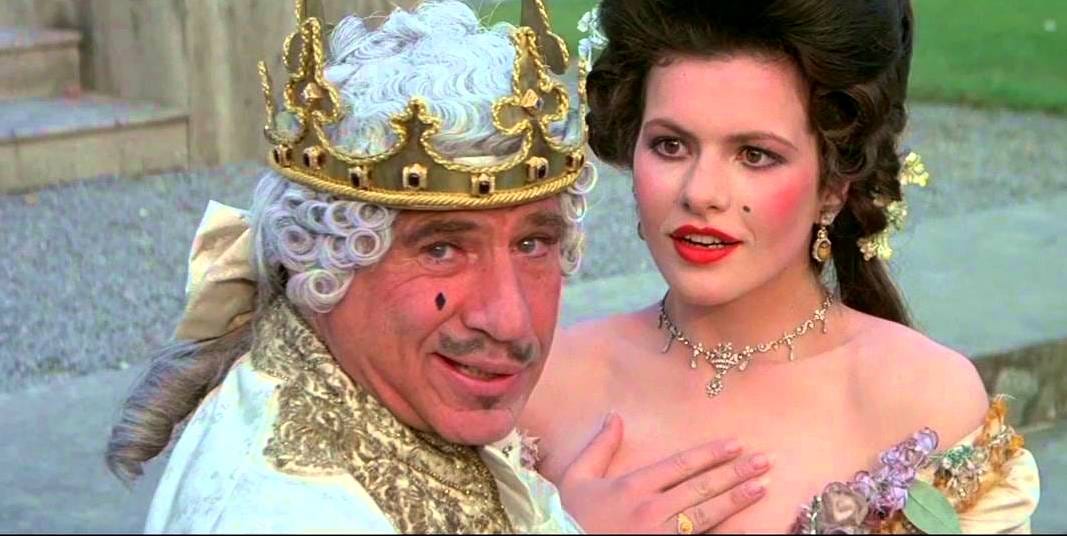
Once upon a time, we had a king.
Our king might be kind and benevolent. He might be brutal and sadistic. Often he was both. But one thing was never in doubt: we knew who was in charge.
Now we don’t.
The Age of Kings had no shortage of bureaucrats. The kingdom needed coin-counters, diplomats, scribes, and accountants to keep the system running smoothly. But every last one of them answered to the man wearing the crown.
Monarchy gave way to democracy. We no longer had rulers; we had representatives, chosen in voting booths. Their authority rested, at least in theory, on the consent of the governed. If they failed in their duties, they could be removed and replaced with someone more responsive to the people’s needs.
This is, of course, a simplification. But it’s one that most modern “free countries” have deeply internalized.
The rise of democracy did not spell the end of bureaucracy. Legislators made laws; judges interpreted them; bureaucrats enforced them. They implemented the rules that kept the machinery of government running.
But where bureaucrats once answered to a king, they now answer to the title above them on increasingly elaborate flow charts. Actions are filtered through layers of review, compliance, and risk management. No single person, crowned or uncrowned, owns them.
Elected officials still wear the trappings of authority. But the real decisions increasingly take shape deep within the system itself. Outcomes are determined by processes, enforced by functionaries, and justified by policies written by committees.
Power has not disappeared. It has simply lost its face.
Your social media accounts can be shut down by algorithms. Your bank accounts can be closed with a phone call. You can find yourself flagged, restricted, or routed into automated decision trees. And you may never discover who made that decision or how you can challenge it.
The protagonists of Franz Kafka’s most unsettling stories never discover who is in charge. The horror lies not in violence or cruelty but in opacity. Decisions are made, judgments are rendered, lives are destroyed. The system remains ever present and ever inscrutable, impossible to confront and impossible to escape.
In The Trial, Josef K. wakes one morning to find himself under arrest. No crime is explained. No clear authority presents itself. He is told that a case exists against him, and that it will proceed. There are hearings, offices, officials, and procedures, but none of them bring him any closer to understanding what he is accused of or how he might defend himself.
Josef K. stumbles through a maze of minor functionaries, contradictory instructions, and obscure rules. The court is everywhere and nowhere at once. Its power is absolute, but its structure is impossible to grasp. There is no judge to confront, no clear accusation to answer, no moment where the system reveals itself.
In The Castle, a land surveyor known only as K. has been summoned, or so he believes, to take up a position. But from the moment he arrives in the village, he is caught in a web of clerks, messengers, and intermediaries.
Every attempt to learn more only leads to further confusion. Messages are misdelivered; instructions are contradictory; officials communicate through layers of assistants and paperwork. The castle governs through ambiguity, endless procedure, and permanent uncertainty.
Kafka imagined these worlds as nightmares. We experience them as procedure.
A patient seeking approval for a life-saving treatment may spend weeks or months navigating an opaque and indifferent system. Claims are denied, appeals are filed, and decisions are delayed or reversed without explanation. There is no one who can explain and no one who can be held accountable.
The systems that govern us are not deliberately cruel, simply diffuse. They operate according to rules, procedures, and incentives that no single person fully controls or fully explains. When those systems fail, there is no face to confront and no authority to appeal to, only a process that continues to run.
We are no longer ruled by tyrants. Instead we are at the mercy of powers that are pervasive, anonymous, and inscrutable.
How Power Operates Without a Face
We’re used to the old stereotypes. We think of power as magnetic and irresistible. It is wielded by strongmen who give orders to adoring crowds while banners flap in the breeze. The strongman gives his followers a face. He comes to power by drawing the group into himself.
Faceless power does not command. It constrains.
It does not tell you what to do, but it shapes what you can do. Instead of giving orders, it structures your choices. It encourages and discourages. You are free to choose, but from an ever-narrowing range of options. And because you never experience overt brutality, you may not recognize it as power at all.
People respond to incentives. We generally favor the least risky or most convenient option. Faceless power makes preferred choices accessible and places obstacles in the way of alternatives. It makes certain views widely visible and slows the spread of dissent.
It doesn’t need to force behavior at bayonet point. It simply makes one path easier and the others more difficult. You remain free to choose, but some choices become increasingly costly.
Enforcement, like power, is distributed. Obedience is handled by platforms that can suspend non-compliant accounts. Research is judged by academics and employers who can make or break your future. Attitudes are shaped by peers who reward conformity and punish deviation.
There is no official commander, no clear authority, no obvious moment of coercion. Faceless power does not need to announce itself, persuade, or demand loyalty. It only needs to shape the environment in which you make your choices.
The system does not need visible enforcers to maintain control. It enforces itself.
Friction: How Faceless Power Shapes Behavior
Every action carries a certain amount of friction: time, effort, risk, and cost. Some choices are easy and immediate. Others are slow and complicated. We generally favor the easiest and safest paths.
Faceless power redistributes that friction. It does not forbid actions outright. It simply makes them more difficult, more time-consuming, or more expensive. At the same time, it makes preferred actions faster, safer, and more convenient. Over time, these small differences shape behavior just as effectively as direct commands.
You do not need to forbid behavior. You only need to make it harder. There is no need to fire an employee for unpopular opinions. Passing her over for promotion sends the message just as clearly, and with less risk of litigation.
This kind of friction feels natural. It is experienced as the normal operation of the system. Over time, you internalize these patterns. You learn which opinions are acceptable and which will carry social, professional, or personal costs. But as power becomes impersonal, people respond by personalizing it.
The Return of the Face
As power has become more diffuse, politics has become more personal—and more focused on a handful of highly visible figures.
Local government, which often has the most direct impact on our daily lives, draws little interest. Your city alderman can shape your neighborhood, your taxes, and your schools, yet most of the attention is fixed on presidential races. All the air is drawn toward the contest for the person who will become the face of the nation.
This reflects a basic human instinct. We look for intention, responsibility, and blame. We want to know who is in charge. Faceless systems frustrate that instinct. When outcomes are shaped by layers of procedure and dispersed authority, there is no obvious person to praise or to blame.
When we cannot locate power, we assign it. Complex systems are reduced to simple stories. Diffuse causes can be assigned to individuals. Political figures become symbols of forces they do not fully control. You can see this pattern in two very different leaders, Donald Trump and Barack Obama.
Both simultaneously inspire intense loyalty and hostility. Supporters see them as agents of change, capable of reshaping the system through force of will. Opponents see them as uniquely dangerous and responsible for everything that has gone wrong. In both cases, the individual becomes larger than the office.
Personalization feels natural. It simplifies a complicated world. It restores a sense of agency and moral clarity. It gives us back our kings.
But it also misleads. It encourages us to overestimate the power of individuals and underestimate the influence of systems. It directs attention toward visible figures while obscuring the mechanisms that actually shape outcomes. We argue about faces while the system continues to operate.
When systems are opaque, people fill the gaps with narratives. Actions that emerge from complex, decentralized processes can look like the result of coordination. Patterns appear intentional, even when they are not designed that way.
The face of power has faded. So we draw new ones.
The Breakdown of Faceless Societies
You can see this dynamic in the history of the Soviet Union. Its early leaders embodied the system in a highly personal way. Whatever their flaws, no one doubted that Vladimir Lenin and Joseph Stalin were in charge. Over time, the system became more bureaucratic, more diffuse, and less visible.
By the era of Leonid Brezhnev, authority had settled into a gray, impersonal structure that was difficult to understand and harder to believe in. Mikhail Gorbachev later emerged as a more dynamic and visible leader. But by the time a face returned, there was no longer a system people were willing to believe in.
The post-Soviet world is more complex, more bureaucratic, and more opaque. World War II and the Cold War left the West with a healthy distaste for dictators. Our new systems keep power diffused to foil the rise of a strongman. These new governments, by design, have failed to win our adulation. But they have also failed to win our trust.
Power can function without a face. Legitimacy cannot. Legitimacy requires a perception of fairness. It needs clear, easily understood processes. It demands accountability. The people must feel that their government cares about their needs.
Faceless systems struggle with all these hurdles. In a bureaucracy, decisions feel arbitrary. The processes are opaque, and responsibility is unclear. Individual leaders can still generate trust and emotional connection. Ronald Reagan won two landslide elections by playing the role of a kindly grandfather figure. No committee will ever inspire that kind of confidence.
Faceless systems move slowly and procedurally. Their responses are cautious and delayed. Narratives move instantly. Emotionally driven stories are more accessible and more compelling than charts and figures. This contributes to growing mistrust and a widening gap between institutions and the people they serve.
As trust declines, people rely more on narrative than process. Opaque systems invite interpretation. Actions that emerge from complex, decentralized processes can appear coordinated or intentional. Individuals within those systems may be seen as representatives of forces far larger than themselves.
Faceless systems may try to regain legitimacy by reintroducing charismatic leaders with strong personalities. At first, these leaders can serve as interpreters of the system, providing a visible point of connection. But this arrangement is often unstable.
Expectations placed on individuals exceed what the system can deliver. When those expectations are not met, distrust deepens. After the Soviet Union’s fall, Russia struggled for years under squabbling oligarchs. That chaos ended with the consolidation of power under Vladimir Putin.
A faceless system can function for a while. It can manage complexity, distribute risk, and avoid the dangers of concentrated power. But it cannot easily sustain belief. That is the paradox at the heart of modern power.
The forces that make our institutions more resilient and more sophisticated also make them harder to believe in. Power has not disappeared. It has become diffuse, procedural, and difficult to see. But legitimacy still depends on something older and simpler, something rooted in our nature as social animals.
It depends on our need to understand who is in charge.