
The Rush to Judgment
How Social Media Became Judge, Jury, and Executioner

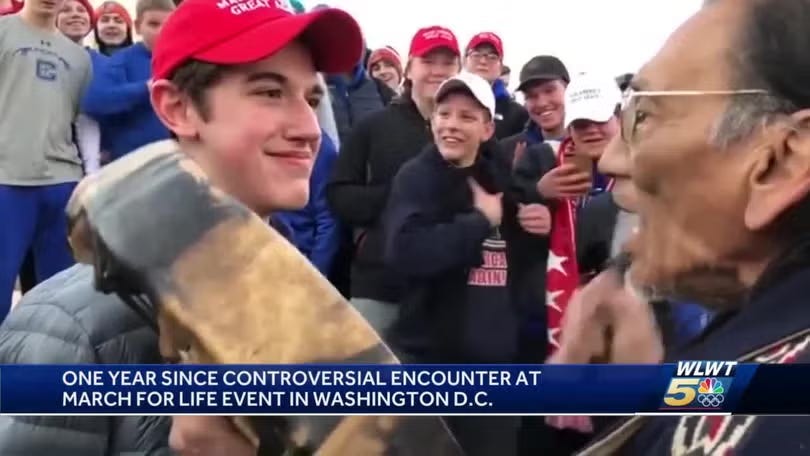
On January 18, 2019, three groups gathered at the Lincoln Memorial. The March for Life came to protest abortion. The Indigenous Peoples March aimed to raise awareness of indigenous issues. And a contingent of Black Hebrew Israelites stood nearby, offering loud and often insulting commentary from the sidelines.
Some Covington Catholic students responded to the taunts with cheers, chants, and a Maori haka. Some participants in the Indigenous Peoples March took offense. The situation escalated into a brief encounter that produced a now-famous image: a Native American man beating a drum in front of a teenage boy wearing a MAGA hat.
That image spread rapidly online.
For many critics of Donald Trump, the boy’s expression—what might otherwise have been read as awkward or uncertain—was interpreted as a smug, mocking grin. Like a Rorschach test, people saw in it what they expected to see. Within hours, the student was identified as Nick Sandmann, and a narrative had already taken hold.
The backlash was immediate and intense. Covington Catholic High School closed its doors for several days. The Sandmann family reported receiving numerous threats. Public figures joined the condemnation. Actress Alyssa Milano was among many who expressed outrage, writing:
This is Trump’s America. And it brought me to tears. What are we teaching our young people? Why is this ok? How is this ok? Please help me understand. Because right now I feel like my heart is living outside of my body.
In the days that followed, longer video footage emerged. It showed a far more complicated sequence of events. It was clear that the Covington students had not initiated the confrontation in the way early reports suggested.
Sandmann later reached settlements with major media organizations, including CNN, The Washington Post, and NBCUniversal. But by then, the initial judgment had already spread to millions. And for many, it remained unchanged.
The Collapse of Due Process in the Digital Age
“Falsehood flies,” Jonathan Swift said in 1710, “and the Truth comes limping after it.” As if to prove his point, the line was later misattributed to Mark Twain. If misinformation traveled quickly in the age of printing presses and telegraphs, it moves at a very different speed in the age of the Internet.
In the social media era, judgment happens in real time. By the time the facts begin to emerge, opinions have already hardened. Anyone with a smartphone can broadcast breaking news to the world—but there are no built-in fact-checkers, and no editors to ensure those claims are accurate or presented in context.
By the time claims are verified (if they are verified) the verdict has already been reached. You never get a second chance to make a first impression. An image that circulates for a few days can shape perceptions for years.
Artificial intelligence has introduced a new hurdle. With a few prompts and a subscription, we can generate convincing images, audio, and video. Deepfakes are a real concern—but they are only part of the problem.
The greater issue is epistemological.
The same tools that make deception easier also make skepticism effortless. Authentic evidence can now be dismissed as “AI slop” by anyone unwilling to accept it. For those already emotionally invested in a narrative, contrary evidence no longer needs to be refuted. It only needs to be doubted.
As verification becomes more difficult, many fall back on what Stephen Colbert once called “truthiness.” Instead of relying on evidence, we rely on intuition—on what feels true.
We want it to be true.
This post says it’s true.
Therefore, this post is true.
In the absence of standards, “compelling” becomes more important than “accurate.” Anger spreads faster than doubt. Emotional certainty feels like moral clarity. And outrage shortcuts critical thinking.
There are few consequences for those who get it wrong—or for those who broadcast their accusations in the face of contradictory evidence. Retractions rarely spread as far as accusations. Those who are targeted quickly learn that there is no appeals court for public opinion—only a constant search for the next defendant.
When Speculation Becomes “Truth”
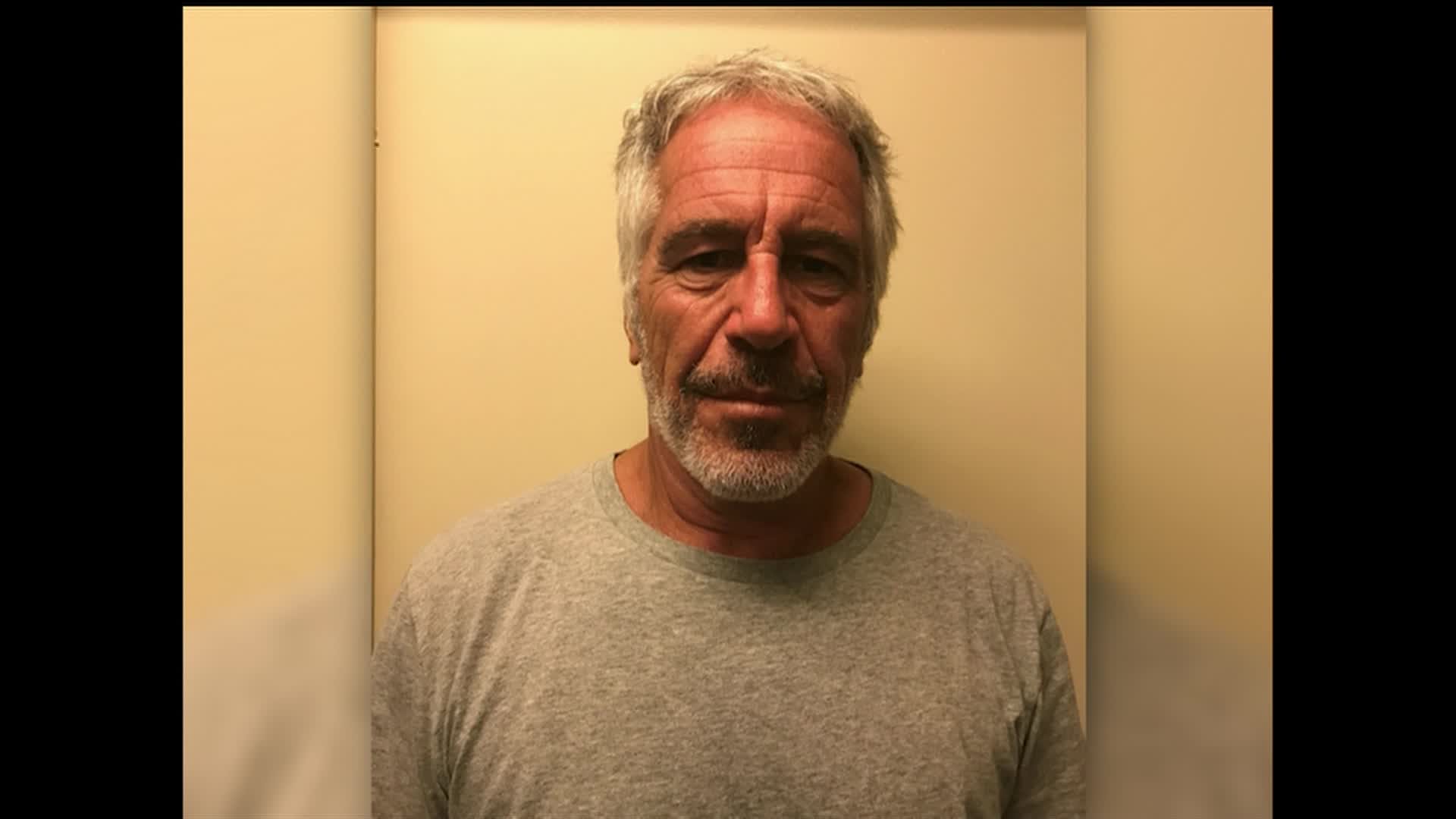
A few months after the Covington Catholic controversy, Jeffrey Epstein was found dead in his cell at the Metropolitan Correctional Center. The coroner ruled it a suicide. Many Americans, perhaps most, suspected that the suicide had been assisted.
His death, by whatever means, did not end the discussion. Epstein Island, his powerful associates, and the underage girls he exploited remained the focus of intense public scrutiny. It was clear that serious crimes had been committed. There were real victims. There had been obvious failures of accountability. And there was a growing demand for something to be done.
But alongside that justified outrage, a darker narrative began to take shape. For some, Epstein was not simply a criminal operating within a corrupt system. He was a central figure in a secretive, ritualistic network of abuse involving the wealthy and powerful.
In that environment, more extreme claims found fertile ground.
Among the most notorious was a rumor that circulated online prior to Epstein’s arrest: a supposed video discovered on a laptop belonging to Anthony Weiner.
The file, often referred to as “Frazzledrip,” allegedly showed Hillary Clinton and Huma Abedin committing acts of horrific violence against a child. In some versions of the story, the violence culminated in Clinton skinning the child’s face and wearing it as a mask.
The claim was horrifying—but it was also unsupported. No verified copy of the video has ever surfaced. No credible witness has publicly confirmed its existence. The story persists largely through repetition, secondhand accounts, and anonymous sourcing.
Supporters of the claim often argue that the lack of evidence reflects a cover-up. The video, they suggest, is too disturbing—or too dangerous—to be made public. In some versions, unnamed officials who viewed it were said to have taken their own lives.
This is where speculation hardens into belief. The absence of evidence does not weaken the claim. It reinforces it.
On November 19, 2025 Donald Trump signed the Epstein Files Transparency Act. By February 2026 over 3.5 million documents, images, and videos had been released. But many were censored to hide names and faces—both of underage women and of Epstein’s guests.
Few were satisfied with the release. Many viewed it as a limited “hangout,” a partial disclosure meant to deflect attention while protecting those most responsible. And the fact that, to date, none of Epstein’s associates have been charged with crimes only reinforces those suspicions.
Wealth and power, after all, appeared to shield the exploitation of young girls.
Why, many ask, wouldn’t they also shield something worse?
The Problem of Proving a Negative
The Epstein files contain a great deal of embarrassing evidence. A few powerful people have apologized or stepped down from their posts after exposure. But we have seen no documents describing Satanic rituals, no snuff films, no photos of cannibal dinner parties. This has by no means quelled the rumors. Which is to be expected.
Some claims are not just difficult to verify. They are almost impossible to disprove. And for those who are inclined to believe them, the absence of evidence becomes evidence of a conspiracy.
Making a claim is easy. You can publish a blog post announcing that Hollywood actors have been arrested and replaced by body doubles. You can tell your podcast audience that a B-list celebrity is a Satanic high priestess who sacrifices children to ancient gods.
You will encounter skepticism. But you will also find a surprising—some might say unsettling—number of believers. The more extreme the claim, the harder it becomes to disprove. And the more powerful it becomes for those willing to believe it.
I saw that actor yesterday, and he looks just like he did the last time I saw him.
Hollywood is full of makeup artists.
No one has seen the Frazzledrip video.
Because they’re protecting Hillary Clinton.
We have pictures of that “Satanic high priestess” attending church on Sundays.
The devil poses as an angel of light.
Records can be falsified. Photos can be altered. Videos can be staged. Witnesses can be bribed or threatened. No proof will satisfy someone who is determined to believe. You can demonstrate a lack of evidence—but not an absence of possibility.
Belief becomes a test of character. To accept the claim is to show moral clarity and courage. To question it is to risk being seen as an apologist—or worse, a participant. The more horrific the accusation, the harder it becomes to challenge it without implicating yourself.
Especially when the accusation has deep historical roots.
Blood Libel and Satanic Panic

On Holy Saturday 1144 William of Norwich, a 12-year old tanner’s apprentice, was found murdered in a wooded area. The local Jews were immediately suspected, but no arrests were made. William’s remains were interred in a local monastery, where a miracle-cult arose around the deceased boy.
With his legend grew other legends about his death. A Jewish convert to Christianity, Theobald of Norwich, asserted that William’s murder was the work of a self-proclaimed Messiah in Narbonne, France. Each year this Messiah drew lots to see where the annual sacrifice took place. Theobold explained:
Hence it was laid down by [the Rabbis] in ancient times that every year they must sacrifice a Christian in some part of the world to the Most High God in scorn and contempt of Christ, so that they might avenge their sufferings on Him; inasmuch as it was because of Christ’s death that they had been shut out of their own country, and were in exile as slaves in a foreign land.
Theobald claimed that he, like most Jews in England, was aware of the sacrifices. After learning of the miracles taking place at the boy’s tomb, he turned away from Judaism and became a Christian. But everything we know about Theobald comes from Thomas of Monmouth’s The Life and Miracles of St. William of Norwich.
The accusations that followed established a durable pattern. Jews were said to kidnap Christian children, torture them, and use their blood for ritual purposes—often in the preparation of Passover matzah. These stories spread across medieval Europe, reinforced by confessions extracted under torture and treated as credible evidence.
The last blood libel trial took place in Russia in 1911, when Mendel Beilis was accused of murdering 12-year-old Andrei Yushchinsky as a Passover sacrifice. Although he was found innocent after 2 years in prison, Beilis was forced to emigrate due to anti-Semitic threats. The jury, notably, declared Beilis innocent—but still concluded that the boy had been sacrificed in a ritual murder.
The 1980s and early 1990s saw America caught up in what came to be known as the Satanic Panic. Daycare workers, teachers and ordinary citizens were accused of participating in secret, child-abusing Satanic cults.
California’s McMartin preschool trial was one of the most prominent cases. Staff members were accused of bizarre acts including flying through the air, conducting rituals in hidden chambers and underground tunnels, and abusing children in ways that defied physical possibility.
The investigation lasted for years and became the most expensive criminal trial in American history. No convictions were secured. But similar accusations surfaced across the country, often following a familiar pattern.
Suggestive questioning of children.
Escalating claims.
A staunch conviction that something vast and hidden was being uncovered.
The evidence in these cases was often thin or nonexistent. Investigators relied heavily on testimony elicited through leading or coercive interview techniques, particularly with young children. Physical evidence was rare, and when it was sought, it frequently failed to corroborate the allegations.
But as in earlier blood libel cases, the absence of evidence did not end the accusations. Instead, it was often interpreted as proof of the conspiracy’s sophistication. The cults, it was said, were powerful enough to erase traces of their crimes.
The panic was amplified by media coverage, talk shows, and self-described experts who warned of a hidden epidemic of ritual abuse. By the time skepticism began to take hold in the 1990s, dozens of lives had been disrupted or destroyed. Many of the accused spent years in prison before being exonerated.
From Pattern to System
Social media callouts are certainly less bloody than burning down Jewish communities or imprisoning people for supposed ritual abuse. But they are rooted in the same patterns that drove those earlier monster hunts.
As Europe groaned under the weight of 16th-century religious wars, witch hunters made a tidy living whipping up hysteria and burning unpopular old women. Today’s social media influencers operate in a different medium—but under similar incentives. Outrage generates clicks, attention, and revenue. And the more extreme the claim, the greater the reach.
Outrage brings social rewards as well as financial ones. Publicly condemning others marks you as a Good Person who is Concerned About the World. It earns status among like-minded observers and offers the feeling of moral heroism—without the cost, risk, or sacrifice that genuine heroism requires.
Callouts also define the boundaries of the tribe. They signal what is acceptable and who must be shunned. They create an “us” by identifying a “them.” In that environment, what you believe matters less than whom you believe with.
The incentives are clear. Callouts are cheap to make and potentially very rewarding. The most egregious accusations may invite legal consequences, but the overwhelming majority—even when demonstrably false—go unpunished. If a claim goes viral, the accuser gains attention and status. If it collapses, the crowd moves on.
All of this ensures that social media will remain fertile ground for moral panics for some time to come. The system rewards speed, certainty, and outrage. It does not reward patience, doubt, or restraint.
Slowing the Rush
There is no simple way to dismantle these incentives, or to eliminate moral panics.
But we can choose how we respond to the mob.
Social media functions as a dopamine pump. It rewards you with attention, validation, and a sense of belonging. The emotional pull of outrage can feel intoxicating. Intoxication is the enemy of judgment.
We can remember that accusations are not proof. We can distinguish between verified facts and unsupported claims. Viral posts are not always true. Allegations may demand attention, but they do not deserve belief without evidence.
Social media rewards speed. There is constant pressure to respond immediately, even when the facts are incomplete. Waiting is a form of discipline. The first version of a story is rarely the final one.
Participating in an unjustified pile-on amplifies the harm. Think before you share, repost, or comment on accusations. When it comes to choosing targets, mobs have a poor track record. The urge to join in—to add to the noise and outrage—can be strong. Resist it. Wait until you have enough information to make a judgment.
Not every question has an immediate answer. Ambiguity is less comfortable than certainty, especially when you are being pressured to choose a side. But uncertainty is not ignorance. It is honesty.
Before you share a claim, ask yourself three questions:
What does it offer me?
Can I trust it?
Am I applying the same standards to this person that I would apply to myself?
In a culture that rewards immediacy, restraint becomes a form of resistance.