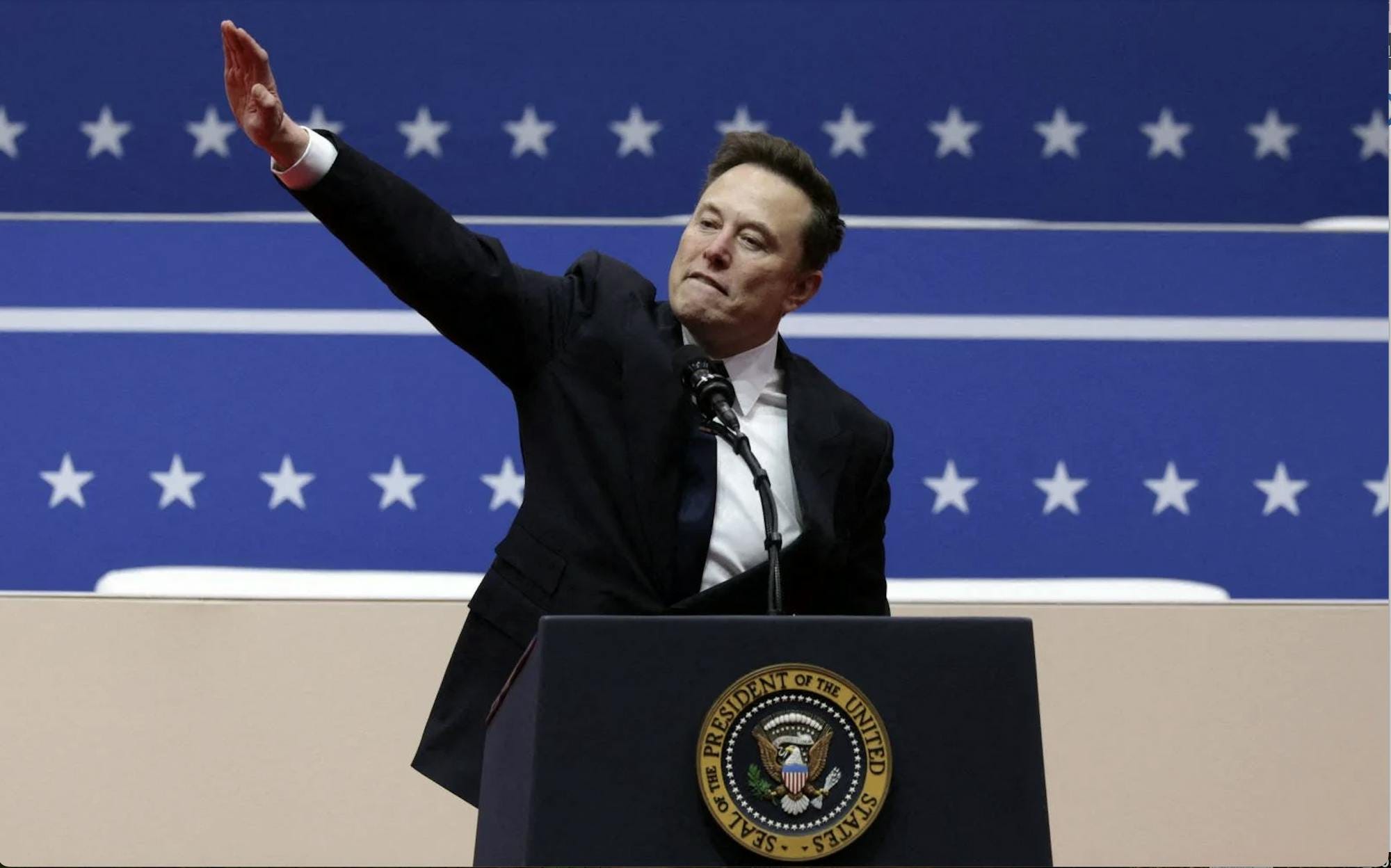
The Soft Strongman
How modern power presents itself as common sense
We know what a strongman looks like.
He wears a uniform. He gives speeches from balconies. He silences critics and surrounds himself with loyalists. His power is visible, theatrical, and unmistakable. Even if we disagree about when the label applies, we share a general image of what we are looking for.
That image isn’t wrong.
It is simply incomplete.
The strongman we recognize is the one who has already gained control. The signs are obvious because the process is over.
But in modern societies, power rarely begins that way.
It emerges through influence rather than force. It consolidates through alignment rather than command. It doesn’t restrict choices so much as shape them.
The modern strongman doesn’t need uniforms or declarations of absolute authority.
He offers something more soothing.
A familiar voice.
A trusted platform.
A clear, confident explanation.
He doesn’t need to assert authority.
He simply presents himself as someone who makes sense.
From Force to Frictionless Power
Traditional strongmen rely on visible pressure. Their authority is clear because it is backed by consequences. You know where the lines are, and you know what happens if you cross them.
The soft strongman begins by shaping perception.
He doesn’t tell people what to do. He tells them what’s happening. He explains events, assigns meaning, and identifies who is responsible. In a world that feels confusing or unstable, that clarity is experienced not as control, but as relief.
Choices remain available. Speech is not immediately suppressed. Dissent is not formally banned. But over time, the range of acceptable views begins to narrow. Some ideas are amplified. Others are ignored. Still others become socially costly to express.
Nothing has been explicitly forbidden.
But the landscape has changed.
The result is power that does not rely on overt coercion. It works by reducing friction. The path of least resistance becomes the path of agreement. The simplest explanations crowd out more complicated ones. The most confident voice becomes the most trusted.
People still feel free.
They are free to choose.
But their options have already been shaped.
Their conclusions begin to converge.
And agreement starts to feel like common sense.
The Tools of the Soft Strongman
The soft strongman doesn’t need to silence or eliminate opposition.
He simply needs to shape how it is seen.
How it is heard.
How fast it travels.
Power is not exercised through repression. It is distributed across mechanisms that guide attention, reward conformity, and quietly penalize deviation.
Media is the first tool.
Control does not require censorship.
It requires saturation.
Some stories are repeated until they become unavoidable. Others are ignored until they effectively disappear. Over time, visibility becomes a form of validation. What is seen is treated as real. What is unseen is treated as irrelevant.
Bureaucracy follows.
Rules remain in place, but their application becomes selective. Procedures are enforced unevenly. Investigations begin and linger. Approvals are delayed. The process itself becomes the pressure. No single action is decisive. But the cumulative effect is clear. Some paths become difficult to pursue. Others become easier.
Culture does the rest.
Norms shift. Language evolves. Certain views become associated with competence, decency, or responsibility. Others become linked to ignorance, extremism, or harm.
The boundaries of acceptable opinion are never formally declared.
But they are widely understood.
And then there are platforms.
Modern influence flows through networks that determine what people see, what they share, and what gains traction. Algorithms prioritize engagement, but engagement is shaped by emotion, simplicity, and repetition. The result is not direct control, but directional influence.
Some voices rise.
Others fade.
None of this requires overt coercion.
No laws need to be announced. No rights need to be revoked.
You don’t need to change what’s possible.
You simply need to narrow the range of what feels possible.
The Shift in Soft Power
For generations, media figures shaped opinion. Journalists, editors, and newspaper owners framed events, elevated or buried stories, and influenced public understanding. But they could not directly control how widely information spread.
Social media platforms can.
In 2020, major platforms demonstrated that capacity at scale. Twitter and Facebook suspended the accounts of the sitting President, Donald Trump. They restricted certain lines of discussion around COVID. Twitter also temporarily blocked reposts of a New York Post story about Hunter Biden’s laptop.
The significance was not the specific decisions. It was the capability they revealed.
Newspapers could kill stories. Social media platforms could kill visibility. Journalists interpreted events. Platforms determined how—and if—those events could be discussed.
They could shape what you read.
They could shape what you said.
They might not end the conversation.
But they were not shy about defining it.
Monopoly on Meaning
Power is not just the ability to act.
It is the ability to explain.
The soft strongman does not need to control every institution. He needs to control how events are interpreted.
What happens is not as important as what it means.
Very few of us have direct access to events. We rely on voices that summarize, interpret, and assign significance. The soft strongman positions himself as one of those voices.
He doesn’t argue. He clarifies.
He tells you what’s really going on. He identifies patterns, assigns responsibility, and offers explanations that feel coherent and complete. Competing interpretations are not engaged so much as dismissed.
Over time, this creates a kind of gravity. Events are understood through an established framework. New information is fitted into familiar narratives. Contradictions are absorbed or ignored. The explanation becomes self-reinforcing.
Meaning becomes centralized.
Not through decree, but through repetition. Not through force, but through consistency. The same explanations appear again and again, across different contexts, until they begin to feel like common sense.
Disagreement changes.
It is no longer just a difference of opinion.
It is a failure to understand.
Once that shift occurs, the range of acceptable interpretation begins to narrow. Some conclusions feel obvious. Others feel unreasonable. Still others become unthinkable.
The system still appears open.
But its meaning has already been decided.
Moral Framing Without Violence
The soft strongman does not need to silence opposition. He simply redefines it.
It’s no longer disagreement.
It’s ignorance.
Irresponsibility.
Malice.
The question is no longer “is the argument correct?” but “is it acceptable?”
You don’t have to tell people what they must believe. You just show them what kinds of beliefs are respectable.
Some views signal competence, empathy, and good judgment.
Others are linked to danger, extremism, and bad faith.
No law forbids dissent. No authority bans disagreement. But the cost of holding certain views begins to rise.
Reputations suffer.
Opportunities narrow.
Social standing declines.
The penalties are informal.
But they are widely understood.
Over time, this produces compliance.
Nobody is forced to agree. But disagreement becomes increasingly costly. The easiest path is alignment. The safest position is consensus.
And consensus, once established, reinforces itself.
The boundaries of acceptable thought grow tighter.
What was once debated becomes assumed.
What was once controversial becomes unthinkable.
The system remains outwardly open.
But the range of acceptable belief has already been defined.
People can still form their own opinions. There are no visible chains, no formal restrictions, no late-night raids from the secret police.
But something has shifted.
The range of acceptable choices has narrowed. Some paths feel natural and easy. Others feel costly, risky, or simply not worth pursuing.
The options are still there. They just don’t feel equally available.
This is not enforced from above. It is absorbed from within.
People learn what can be said, what should be avoided, and what will bring approval or disapproval.
Over time, these expectations become habits. The boundaries no longer need to be imposed. They are anticipated.
Not through commands, but through incentives.
Not through prohibition, but through pressure.
The system does not need to tell you what to think.
It shapes what feels reasonable to think.
Choice remains.
Within boundaries someone else created.
And once that happens, the distinction between freedom and alignment begins to blur.
People move in the same direction.
Not because they feel threatened.
Because that direction feels like common sense.
Why This Is Harder to See
We are trained to recognize power when it is visible.
We look for uniforms. Decrees. Clear acts of repression. A moment when the system breaks, and something new replaces it.
That is how power appears in history books.
Sudden.
Dramatic.
Unmistakable.
But soft power doesn’t work that way.
There is no single moment of transition. No announcement. No obvious rupture.
The system remains in place. Institutions continue to function. People continue to speak, to choose, to participate.
Nothing looks fundamentally different.
Each change is small. Each step is justified. Each shift is framed as reasonable, necessary, or temporary. No single action seems decisive. No single moment demands resistance.
By the time the boundaries are clear, they have already been internalized.
By the time the direction is obvious, it already feels natural.
What might once have seemed like constraint now feels like common sense.
There is no villain to point to.
No single figure who embodies the change. No dramatic seizure of power that marks the transition. Only a system that gradually reshapes how people think, what they see, and what they consider possible.
And because it never declares itself, it is rarely named.
It does not need to be announced.
It is simply lived.
The New Face of Power
The strongman has not disappeared.
He has changed.
We still imagine power as something visible.
A king on a throne.
A figure who dominates the stage.
A leader who declares authority and enforces it openly.
Modern power is more subtle.
It works through systems, through incentives, through the quiet shaping of perception and meaning. It does not tell people what to do. It tells them what makes sense.
That is what makes it effective.
People do not feel controlled. They feel informed. They feel aligned. They feel as though they have reached their own conclusions.
And in a way, they have.
The system does not eliminate choice. It guides it.
It does not silence disagreement. It redefines it.
It does not impose belief. It shapes what feels reasonable to believe.
By the time the pattern becomes visible, it already feels familiar.
By the time it feels familiar, it already feels justified.
And by the time it feels justified, it no longer feels like power at all.
It feels like your choice.


